
The Longitude Problem
A fleet lost off Scilly because no clock could keep time at sea; the fix forty years in the making; and a longer fight with the office sworn to reward it.
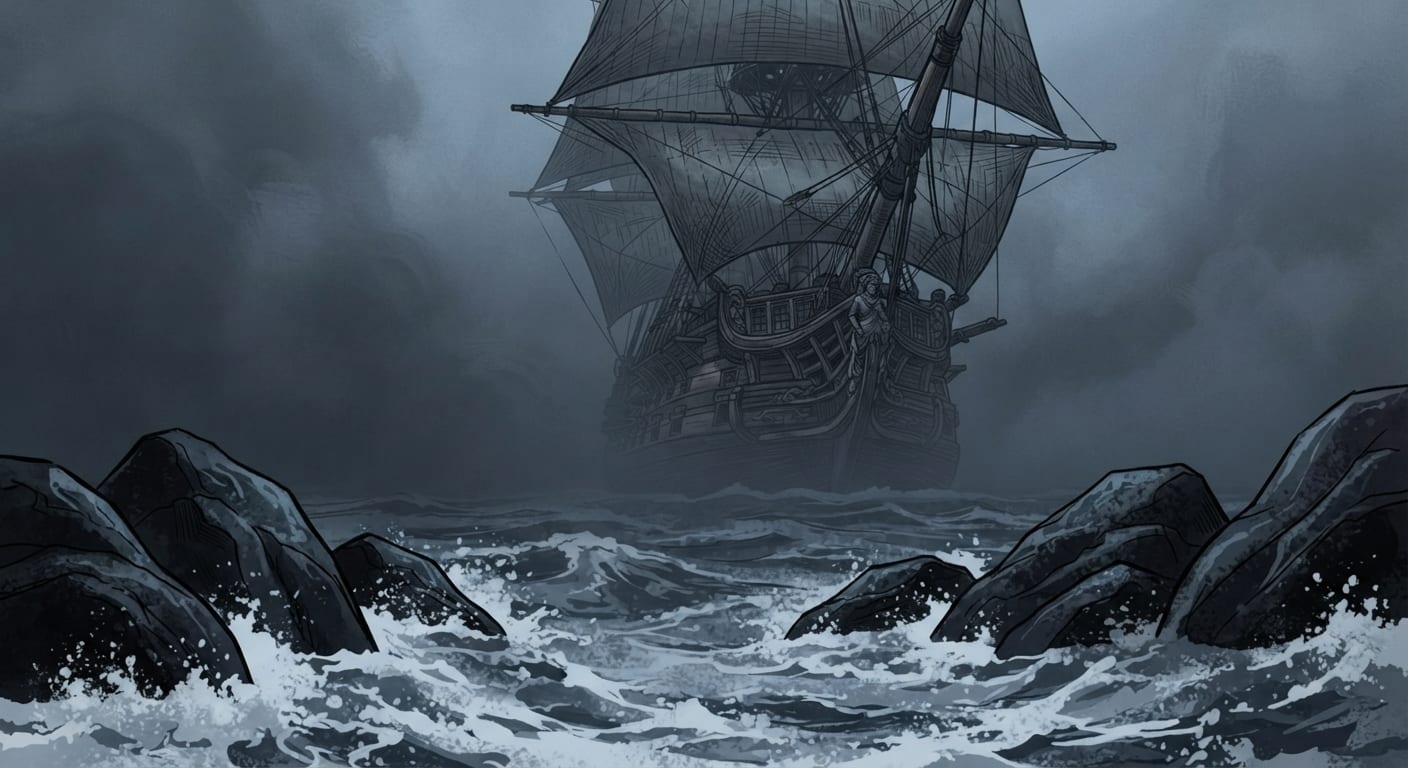
In late October 1707, a Royal Navy fleet homeward bound from the Mediterranean sailed blind through days of thick fog. On October 21, lead-line soundings hit 90 fathoms, and a brief break in the grey allowed ragged sun sights. Admiral Shovell called his sailing masters together. The fleet agreed they were off Ushant, the north-west corner of France, with open water to the north. Only the sailing master of HMS Lenox dissented, placing them near the Isles of Scilly. He was overruled on the lantern-lit quarterdeck.
At roughly eight o'clock on the night of October 22, HMS Association, a 90-gun ship carrying roughly 800 men and Shovell himself, struck the Outer Gilstone rock and sank in 3 minutes. Within the hour, the Eagle, the Romney, and the Firebrand followed her onto the ledges. By morning, 4 hulls were breached and between 1,400 and 2,000 men were dead, with Shovell's body washing ashore on St Mary's days later.
The fleet was not off Ushant. It sat roughly 1 degree of longitude too far west and about 1.5 degrees too far north, right on the Scillies while charts showed open sea. These were experienced navigators; they fixed latitude to a few miles from the noon sun. But east and west were guessed, and every ship guessed the same way. To fix longitude, you must carry the time of another place with you at the exact same instant; no clock could hold that time across weeks of a wet, rolling deck.
This was not a new problem in 1707: a tool that stopped halfway; scholars who left east-west to future generations; tables that kept the problem out of reach; an idea that never saw the sea. Each time, the answer was to wait. Scilly was what that waiting cost on one night.
For 7 years after the night off Scilly, nothing happened. No official inquiry blamed longitude, and no public voice tied the disaster to a missing instrument. The wreck sat in the record as a tragedy and nothing more.
The connection was built later, by men who needed an argument. In 1713, William Whiston, Isaac Newton's successor as Lucasian professor at Cambridge, and Humphry Ditton, a London mathematics master, launched a public campaign for a state reward. They reached back to Shovell's final night and named it a longitude failure. To solve it, they proposed anchoring a line of signal ships across the ocean to fire timed shells into the sky, letting passing sailors time the flash against the sound to fix their position. The scheme was widely mocked as impossible, but the campaign succeeded.
Merchants and sea captains petitioned Parliament, prompting a committee to take written testimony from Newton, who listed a sea-going watch among the methods. He stated plainly that such a watch had not yet been made, beaten by a ship's motion, heat, cold, wet, and dry. In July 1714, Parliament passed the Longitude Act. It offered a sliding scale of £10,000, £15,000, and £20,000 for fixing longitude to within 1 degree, 40 minutes, or 30 minutes of arc, which is 2 minutes of time. The top figure is worth several million pounds today.
The Act named 24 Commissioners to judge entries. They did not meet as a body for 23 years, because there was nothing before 1737 worth convening for. The largest technical prize in the world sat idle, until an unknown Yorkshire clockmaker turned up with a machine.
John Harrison was born in 1693, the son of a Yorkshire carpenter, trained as a joiner with no university, no patron, and no institution behind him. He taught himself clockmaking, building early movements of wood. Around 1730, he took a sea-clock design to London, where the maker George Graham backed him and sent him home to build it. He had no standing, which the Board would later use against him.
5 years later came H1. It was the size of a small cupboard, weighed about 34 kilograms, and used springs instead of a pendulum, which was useless on a rolling deck. Twin balances swung against each other to cancel the ship's motion. In 1736, it went to sea on a trial to Lisbon. On the return leg, Harrison told the master his reckoning was 60 miles off and named the Lizard as their landfall. The coast rose right where he said. The Commissioners took notice, convening in 1737 to fund him.
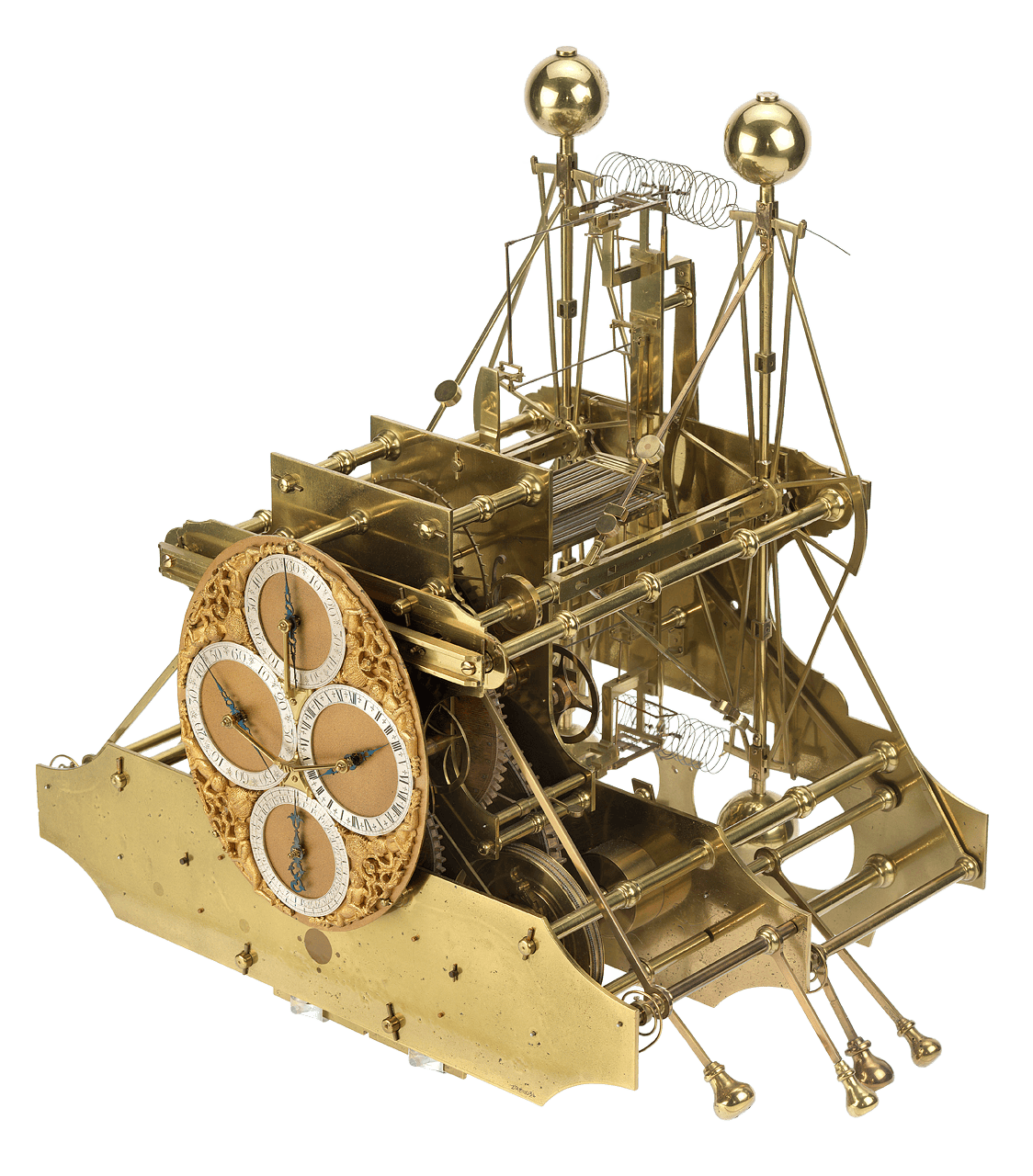
Then came 15 years without a win. H2 was more compact, but Harrison found a flaw himself; the ship's turning motion threw off the balances, and a European war kept it ashore. H3 took 19 years and 2,000 parts. It gave engineering the bimetallic strip and the caged roller bearing, but it never kept steady time. Two of the most useful mechanical devices ever made fell out of a machine that failed at its actual job.
Somewhere in those decades, Harrison noticed that a large watch kept unexpected time. The answer was not a massive engine; it was a small, fast machine. 6 more years of work followed. What he built was not a cupboard. It was a watch.
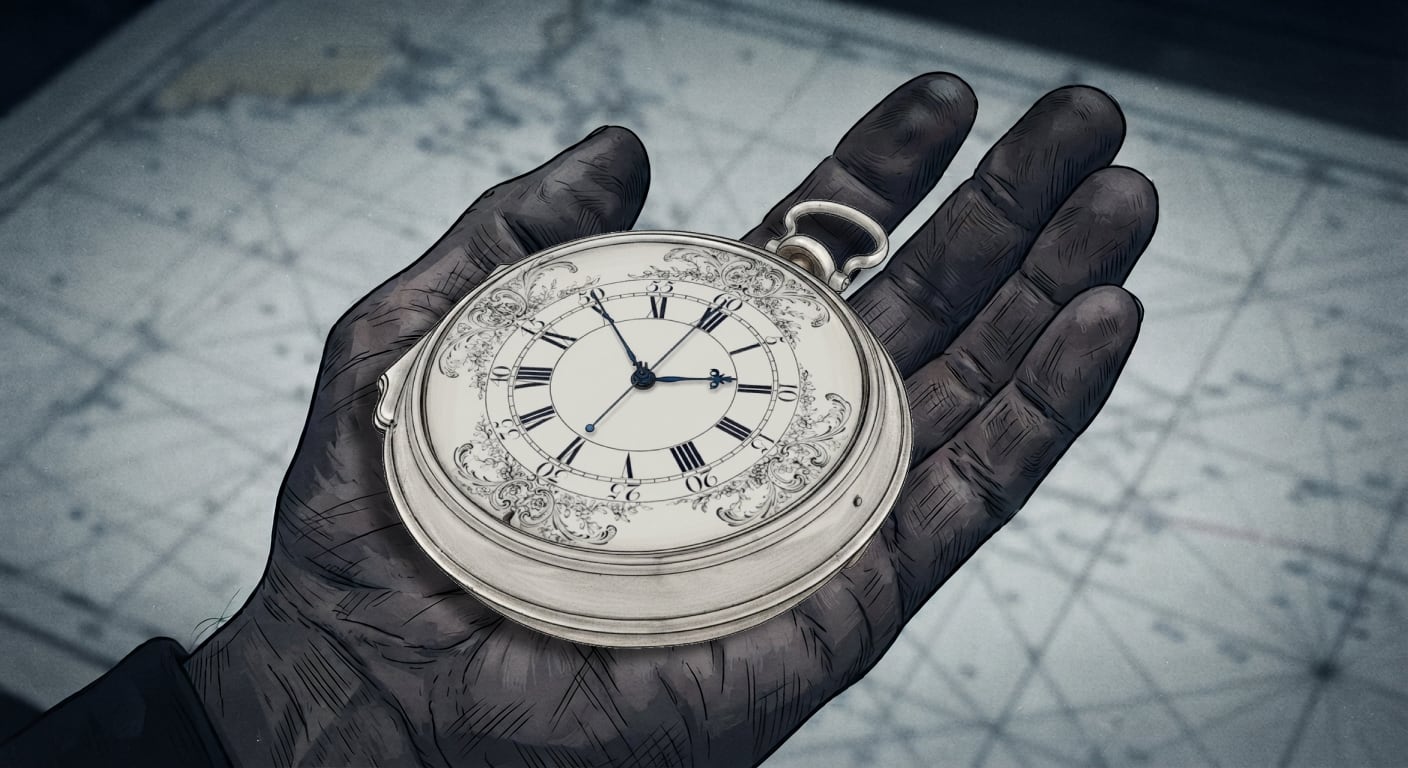
Two centuries of navigators had been broken by the sea. Fleets had shattered on hidden ledges, states had posted fortunes in prize money, and Galileo and Newton had left the problem unsolved. What finally answered them was not a cathedral of science or a national observatory. The answer was a pocket watch.
H4 measured about 13 centimetres across and weighed roughly 1.5 kilograms in its heavy silver cases. It looked like an expensive trinket a wealthy merchant might carry to check the hour on a London street. Inside, it used diamond pallets to cut friction and a fast-beating balance to hold steady against the pitch and roll of a deck.
The same object can be read two ways. On one side stood 200 years of dead reckoning, countless lost cargoes, fleets broken on uncharted rocks, and a state prize of £20,000 waiting a generation for an owner. On the other side stood a machine you could close your fist around. 34 kilograms of metal had shrunk to 1.5 kilograms of steel and silver. A problem the size of an ocean was answered by a thing the size of an orange.
It required 30 hours between windings. It held 40 years of solitary bench labour inside two silver shells. Whether it could survive the salt air and the rolling waves of a voyage to the tropics remained to be tested.
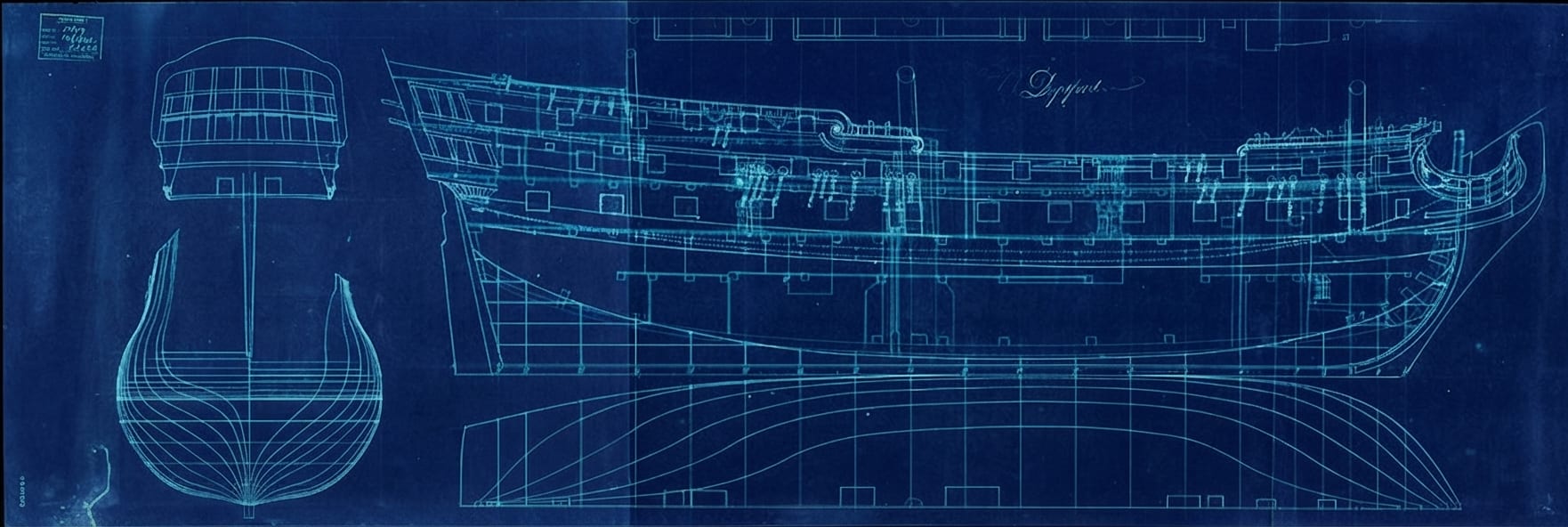
In November 1761, H4 went to sea bound for Jamaica aboard HMS Deptford. John Harrison was nearly 70, so his son William accompanied the box. Before sailing, they established the watch's rate, its daily loss, so the drift could be calculated at the far end.
After 81 days at sea, William checked the watch against the known longitude at Kingston. H4 was 5 seconds slow, an error of roughly 1 nautical mile. The machine had carried Greenwich time across 11 weeks of open ocean to within the span of a quiet walk. The Board of Longitude was not persuaded. 5 seconds, they argued, could be luck. Furthermore, a watch that had taken 6 years to craft was not practical for a navy that needed hundreds. They offered a fraction of the prize; the Harrisons refused. A second trial was ordered.
In 1764, H4 crossed the Atlantic again, this time to Barbados. To verify the result, the Board sent Nevil Maskelyne, an astronomer who backed a rival method of finding longitude by reading Greenwich time off the Moon's position relative to the stars. Over the entire voyage, H4 kept within 39 seconds, an error of under 10 miles. Maskelyne's lunar distance calculations, over the same crossing, came within about 30 miles.
The watch had worked twice. It had beaten the alternative with the alternative's own champion holding the paper. The machine itself was no longer in doubt; the only question left was whether the Board would ever admit it.
In early 1765, Maskelyne became Astronomer Royal, a post that carried a seat on the Board of Longitude. The man who had assessed H4 in Barbados and backed a rival method was now one of its judges.
Maskelyne's method needed no clock. Measure the angle from the Moon to a star, run the calculation, and the Moon's place among the stars gives you Greenwich time. What made it usable at sea was the Nautical Almanac, first published for 1767: lunar positions predicted years ahead so the sailor did not compute them, only looked them up. Costing a few shillings, it was a direct descendant of the old printed star-tables, where someone else had done the sums and you inherit the results.
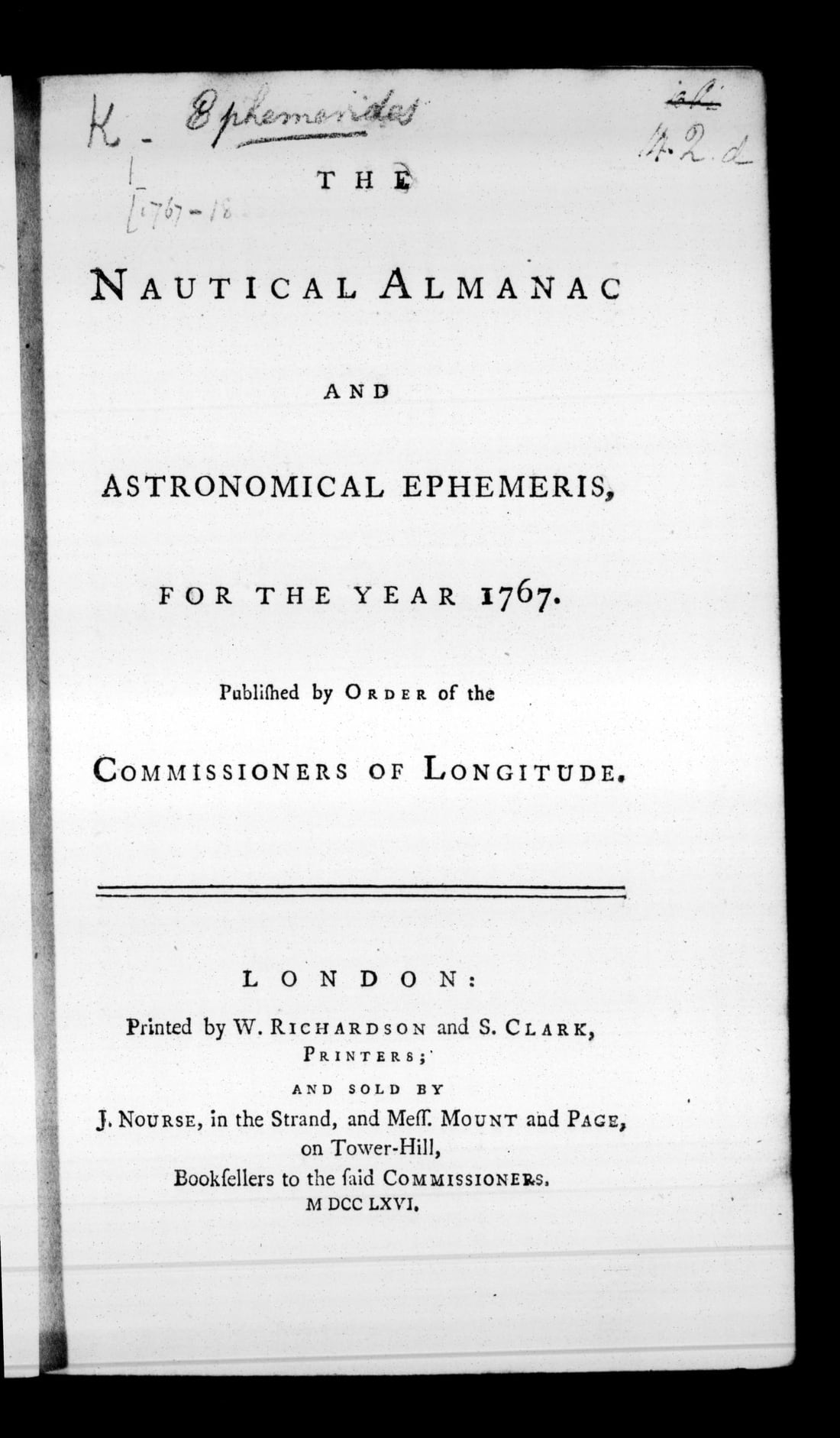
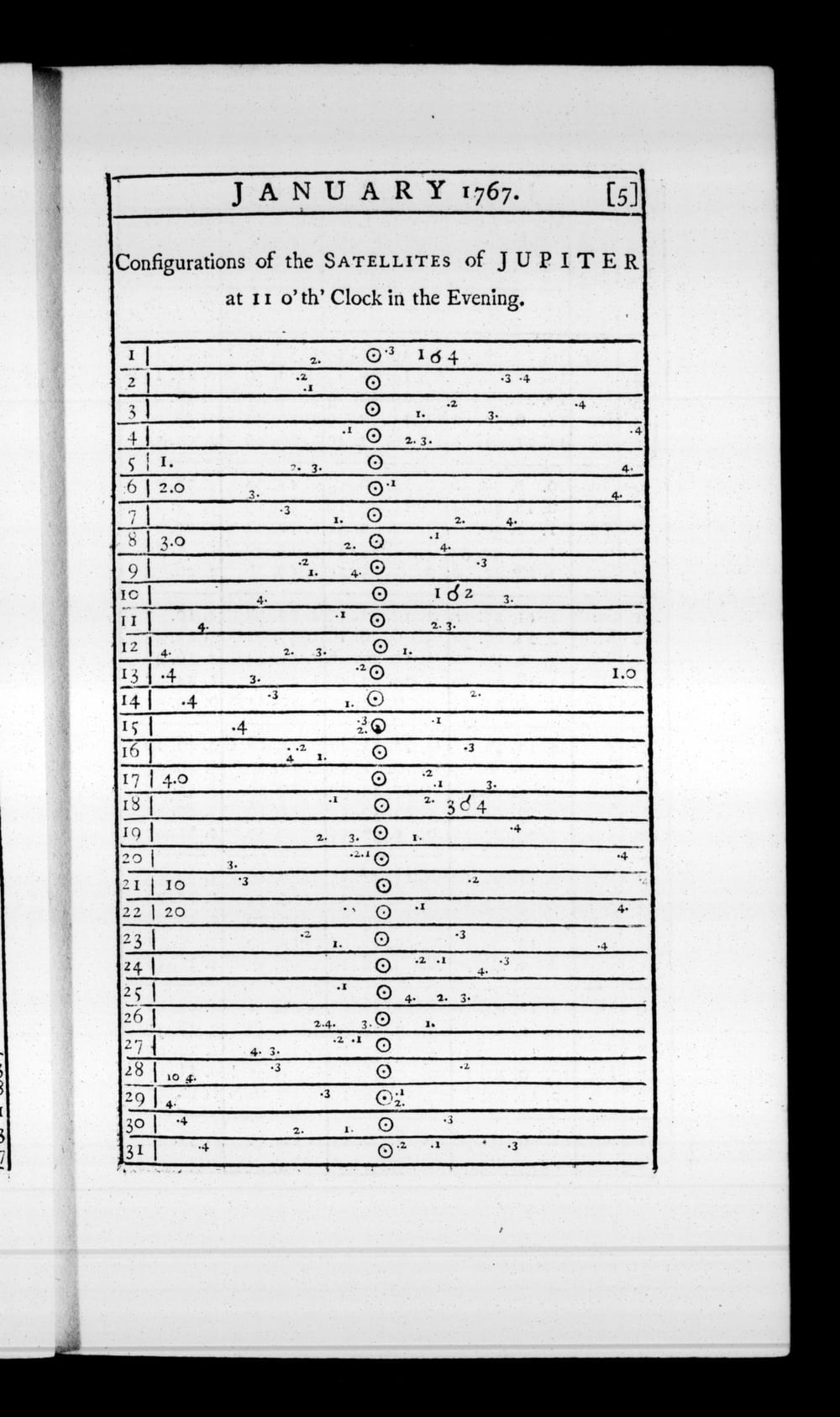
The two answers to the problem were built in opposite ways. Harrison's was one man at a bench for 40 years. The Almanac's numbers came from a scattered network of part-time computers working from their own homes across Britain, each figure worked twice by different hands and checked by a third, posted back and forth. One was a craft held in a pair of hands; the other was the first rough sketch of industrial calculation.
For the rest of the prize money, the Board made its demand: hand H4 over, take it to pieces before a committee, write down how every part worked, and let other makers build copies to prove it was not a fluke. It was an institution attempting to extract a technique from a craftsman by order. But a navy needed hundreds of timekeepers, not just one, so replication was a defensible standard for public money. The demand hung in the air, and the machine went onto the bench.
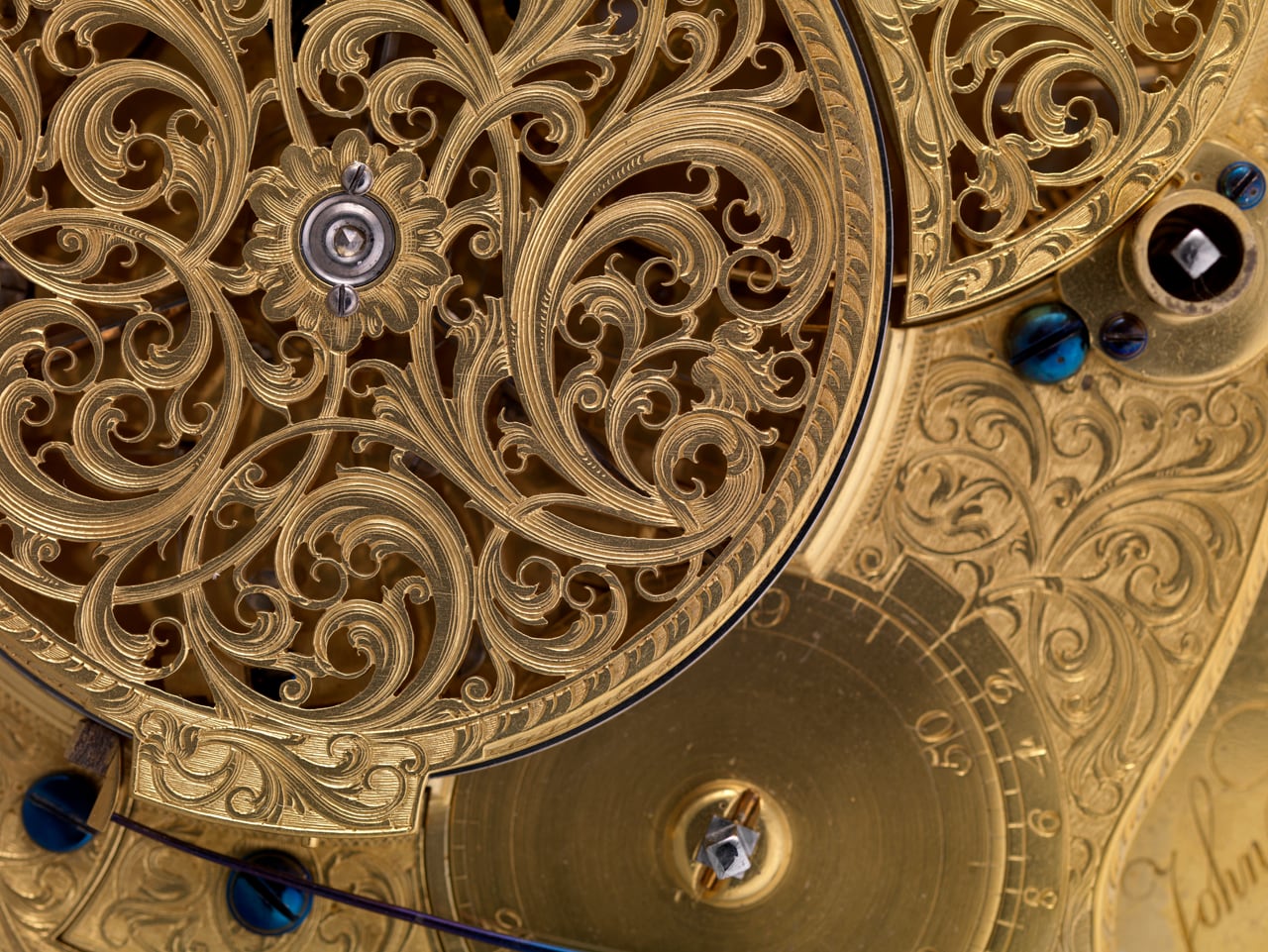
After surrendering H4 to the committee in 1765 and taking the first half of the money, Harrison found himself barred from his own machine. He and his son William set to work on a fifth timepiece, building H5 upon the exact same principles while the maker entered his late 70s.
In 1772, William secured a royal audience with George III. The King maintained a private observatory at Kew, built originally to track the transit of Venus across the solar disc. He ordered H5 brought to his observatory for testing. That summer, the King took a direct, personal part in the daily observations. Across the 10-week trial, H5 lost only about a third of a second a day.
The King advised Harrison to petition Parliament directly. In 1773, Parliament voted the maker £8,750 as a public reward for his lifetime of labour. Harrison was 80 years old.
He never received the £20,000 prize. The full prize offered by the 1714 Act was never formally awarded to anyone, at any time. When the final ledger was drawn, Harrison had received a total of £23,065 through various channels. This figure included decades of modest Board increments, the initial half-payment for H4, and the late parliamentary vote. He was paid slightly more than the prize itself, but through every channel except the one that would have meant admitting he had won.
He died 3 years later in 1776, at the age of 82.
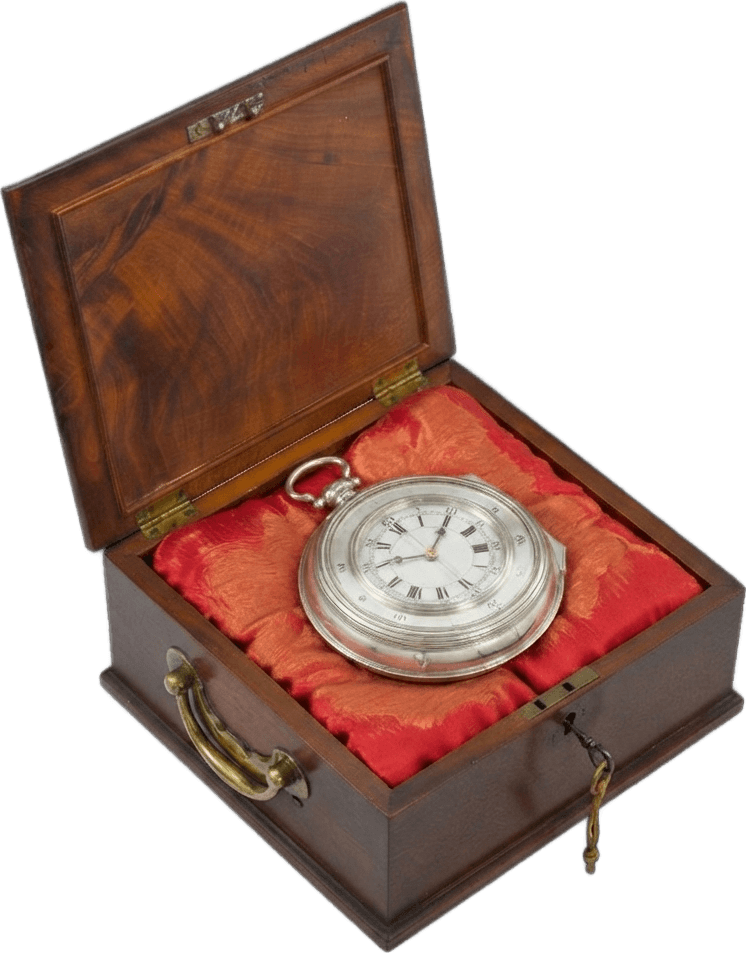
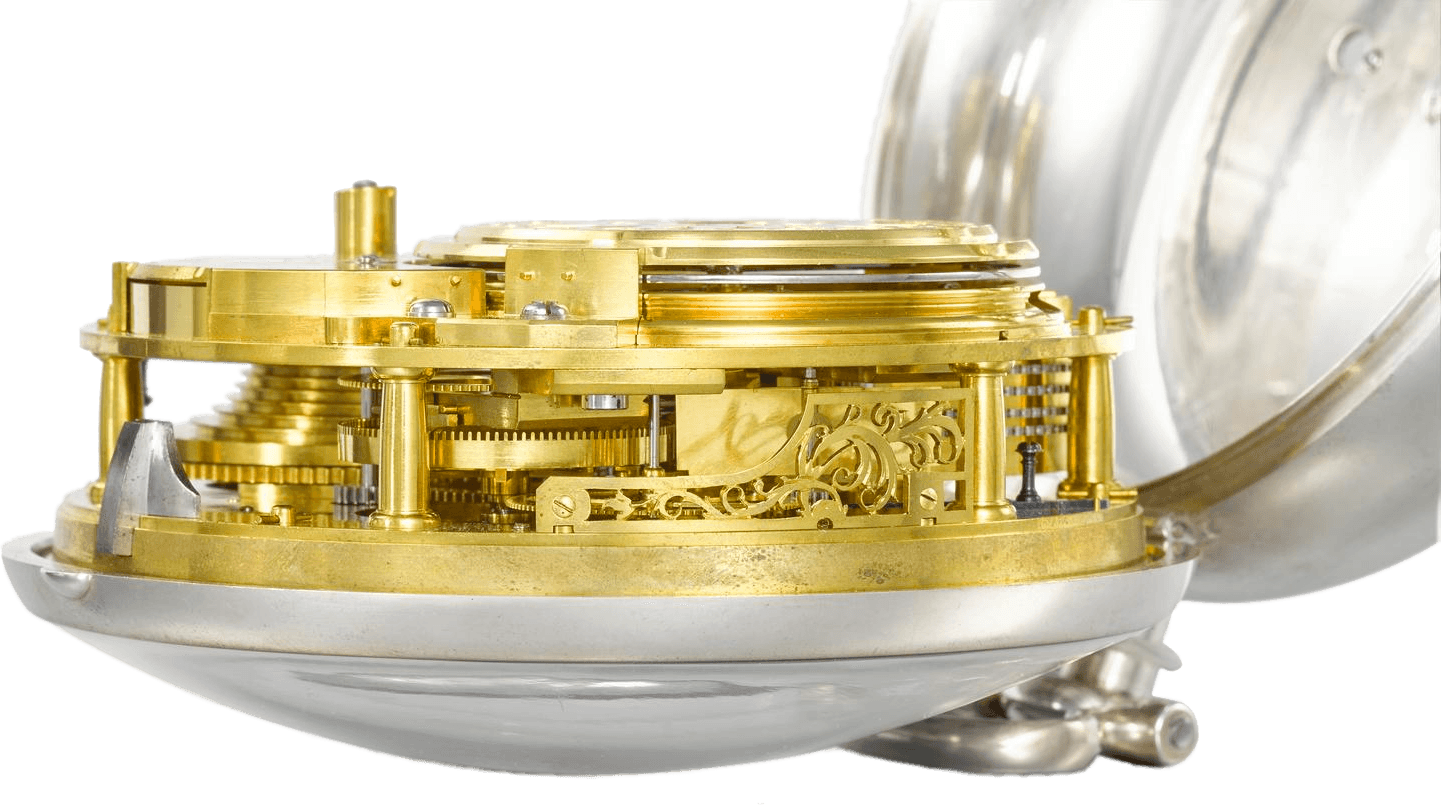
The dismantling the Board ordered was carried out to the letter. Larcum Kendall, an apprentice-trained London watchmaker, built a faithful copy of H4, designated K1, for £450, alongside an extra £50 granted for the 9 months spent adjusting it and taking both mechanisms apart for inspection. K1 went to sea with James Cook on his second and third voyages. Cook, who had set out sceptical of mechanical timepieces, came to rely upon it, calling it "our trusty friend the watch" and his "never failing guide," while 3 competing timekeepers by other makers on the same ship failed. The bureaucratic demand that had looked like petty persecution to Harrison produced the object that proved the method worked at sea.
Yet K1 cost £450, roughly the price of a modest house. Skilled makers were few, and although a sea-going clock was now technically possible, it was not yet available. 40 years to build the machine, another 10 to be paid for it, and then 50 more before an ordinary merchant ship routinely carried one.
For decades, the cheaper answer won the practical race. What most sailors used instead was Maskelyne's Nautical Almanac and a sextant: a few shillings for the book, and a long calculation performed at the chart table. Vessels wealthy enough to afford a timekeeper carried it alongside the lunars, checking one method against the other. The two solutions ran side by side for two generations. The book built to contest the watch put longitude into most hands first. Precise time was the answer, and most sailors first met it on paper.
The argument does not stop scaling. To know where you are on a turning globe, you have to carry the time of another place, exactly. Push that demand for precision far enough, to a network of clocks orbiting in space, and Newton's steady, absolute time is no longer good enough; the necessary correction is Einstein's. From 4 warships broken on a Scilly ledge for want of the hour somewhere else, to a number a sailor could buy for a shilling, to a signal from space.