The Ground Truth
Turning a reasonable estimate into somewhere to land, with a crater full of boulders in the way and an awkward margin of error.
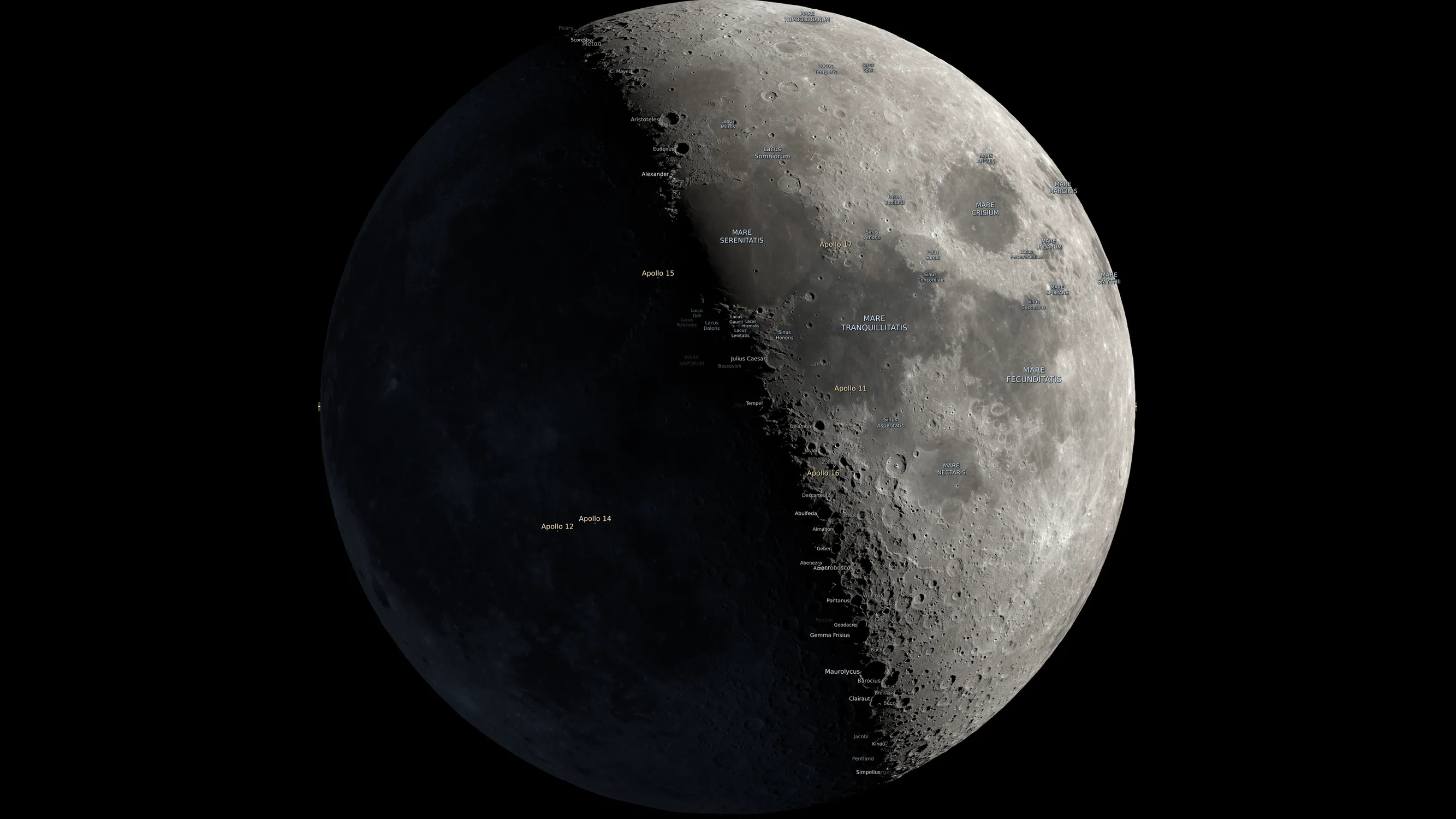
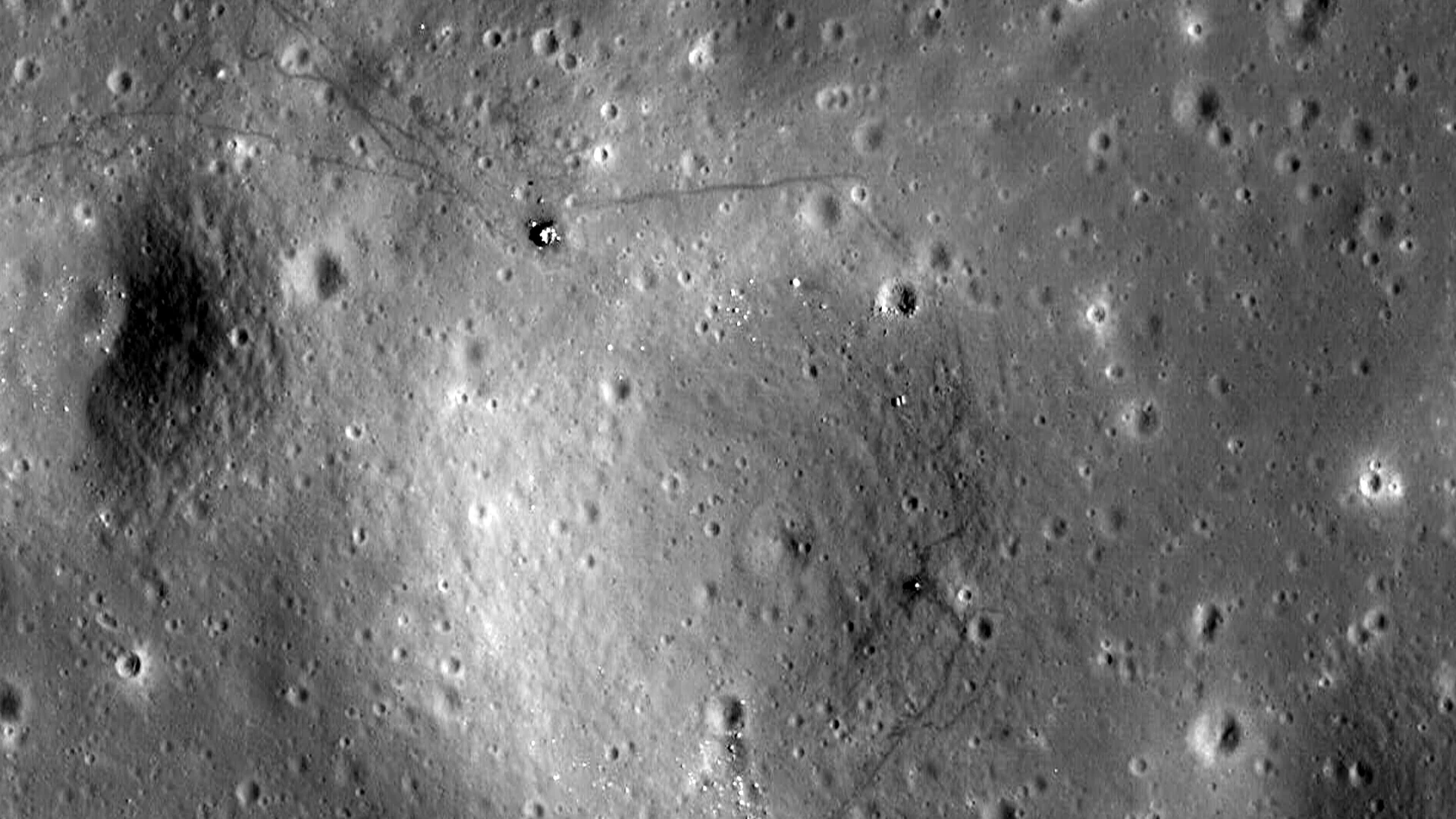
On 20 July 1969, a few minutes into Apollo 11's descent to the Moon, Neil Armstrong watched a crater approach against the scale etched into his window. It was Maskelyne W, named for the astronomer who had checked Harrison's H4 on the Barbados voyage and championed finding longitude from the Moon's position among the stars. The crater passed about three seconds earlier than expected. Eagle, the lander, was further along its path than its own computer believed.
"Our position checks down range show us to be a little long," Armstrong radioed to Houston.
Eagle was heading down with two men aboard, while a second craft stayed behind in orbit with a single pilot. From orbit, being a few kilometres off mattered very little. On the surface, it could be the difference between smooth ground and a field full of boulders. The job was to turn an approximate position into one safe spot, and then to know where the craft had actually arrived.
The error had been building since Eagle undocked. Gas left in the tunnel between the two craft escaped as they separated, giving the lander a small, unmeasured push. Over the next orbit, that push carried it further along its path than the computer expected.
The ground had seen the discrepancy first.
Several minutes earlier, before the descent engine fired, Steve Bales, the guidance officer in Houston, had been studying the radio tracking. Doppler measurements showed the lander further along than the computer's figures said. The error had already passed more than halfway towards the limit at which the landing would have to be called off.
Bales reported it to the flight director and said he would keep watching. As the descent went on, the error was not growing.
The lander's software had no way to accept a correction from the ground once the engine was burning, so anything new would have to come from aboard Eagle. The ground could see the error, but that knowledge stayed in Houston.
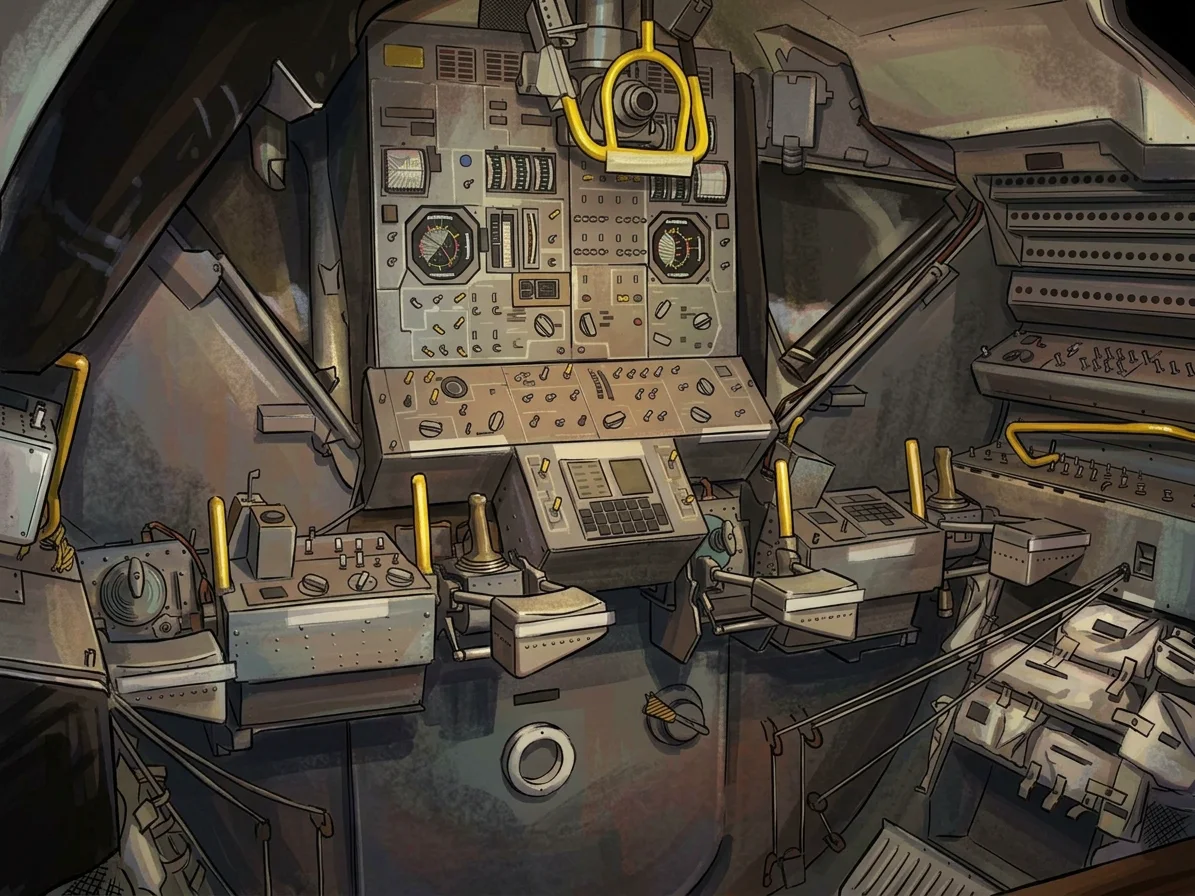
Fourteen kilometres up, the lander rolled from windows-down to windows-up. The manoeuvre turned the crew's windows towards the sky and brought the instrument underneath Eagle into view of the Moon.
The landing radar locked on during the roll. Four radio beams bounced off the surface below: one measured the distance straight down, while the other three measured speed across it, using the same Doppler effect behind Houston's tracking. For the first time, an instrument aboard Eagle was putting numbers to the Moon itself.
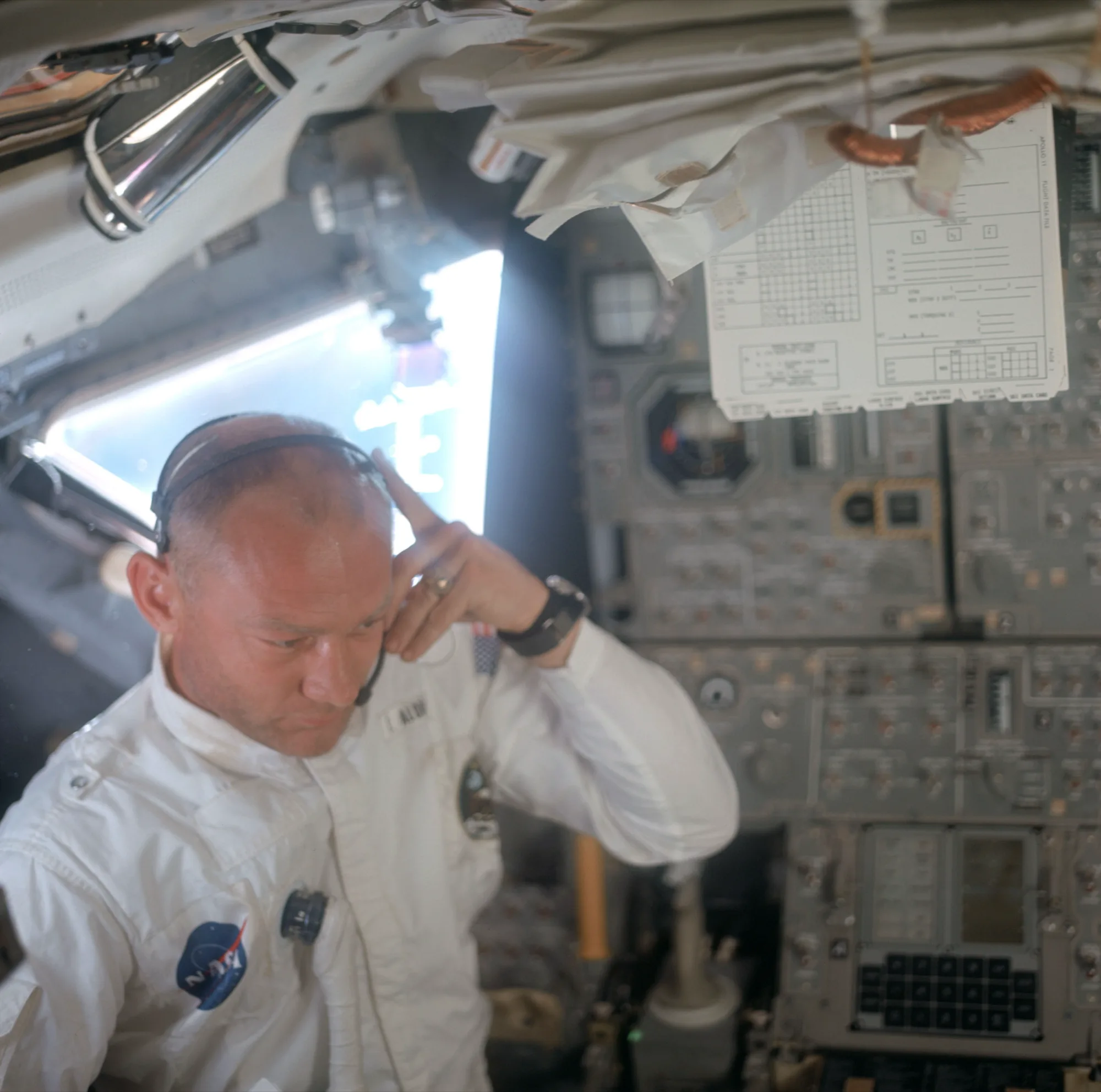
Beside Armstrong, Buzz Aldrin worked the computer's keyboard, calling up figures and reading them aloud. He asked it to display the difference between its calculated height and the height measured by the radar.
The two figures differed by about 850 metres.
The computer thought Eagle was higher than it really was, a discrepancy consistent with what Houston had seen in its own tracking data.
Eagle now had two answers to how high it was, and no way yet to tell which was right.
Moments later, Aldrin passed on the view: "Got the Earth straight out our front window."
Two seconds later, a warning light came on, with a code that neither astronaut recognised. Armstrong asked Houston for a reading on it.
The landing radar, pointing down at the surface, was doing its job. The second radar was meant to help Eagle find the craft in orbit again after leaving the Moon. A problem in its interface sent the computer a stream of signals it had no use for.
During the descent, the computer was already using about 90% of its capacity. When the second radar pressed for more than the 10% remaining, the machine had too much to do.
The alarm came from the Executive itself trying to reschedule the navigation tasks over and over and running out of room.
The computer had also been designed to restart after a failure and carry on from its last safe point, a precaution intended mainly for hardware problems. When the overload triggered a restart, the software rebuilt the latest navigation job and dropped functions that were not considered critical. It kept navigating and steering.
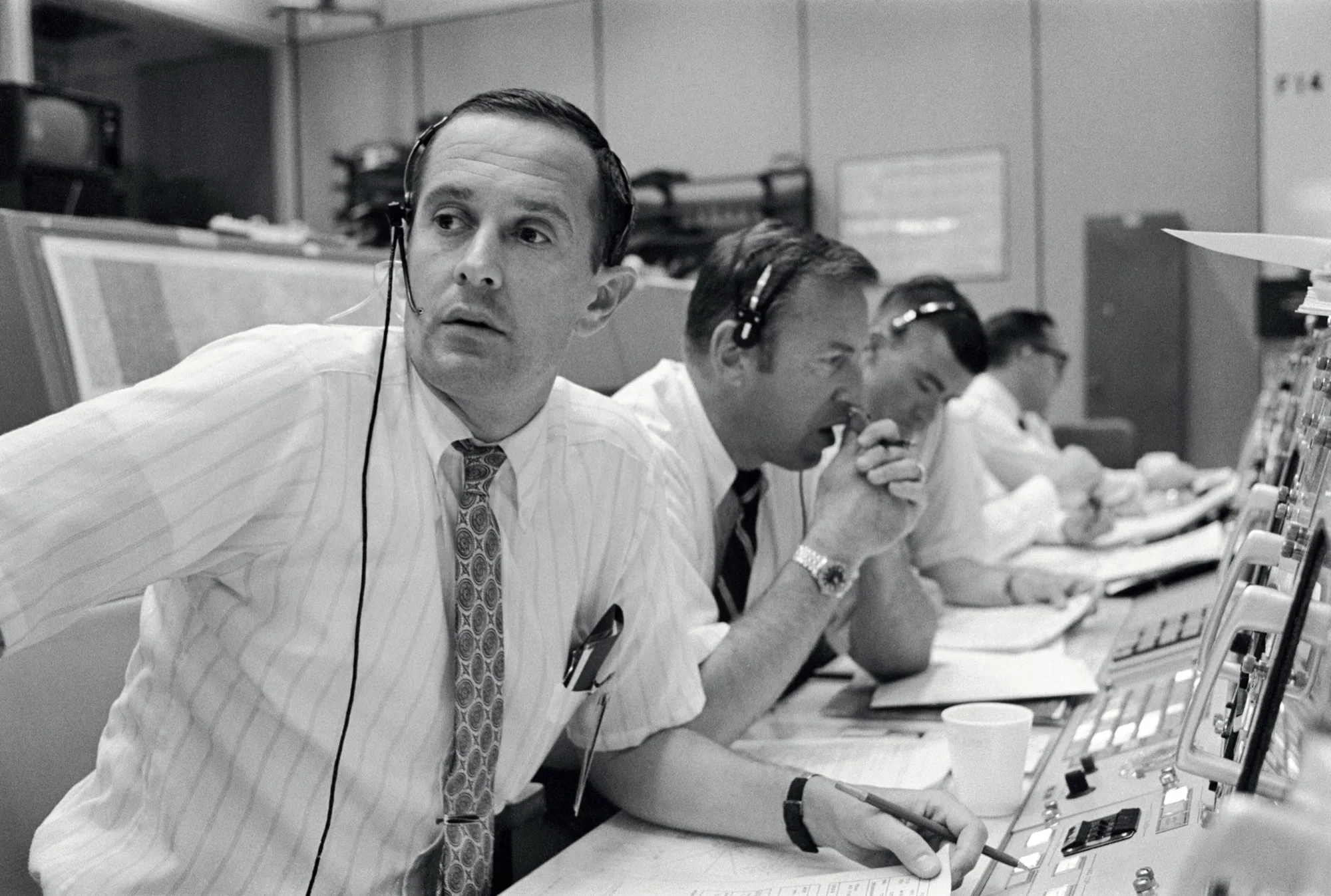
In Houston, a young engineer in the back room checked his handwritten list of alarm codes and said they could carry on. Bales agreed, the flight director gave the order, and astronaut Charlie Duke relayed it to the crew: "We're Go on that alarm."
During those same seconds, the landing radar's measurements were being weighed against the computer's own estimate. Within thirty seconds, the two heights agreed.
But the alarms kept coming. The official report found that they did not affect guidance or control, yet they interfered with the crew's early assessment of the landing approach. Armstrong and Aldrin were watching the displays when they needed to be looking out of the window.
At about two kilometres above the surface, Eagle tipped upright. For the first time during the descent, the crew could see where they were going.
A number appeared on the computer's display, and Aldrin read it aloud. Armstrong found the matching mark on his window and lined his eye up with it, looking past the glass to the ground beyond. The computer supplied the angle; Armstrong supplied the line of sight. Where the mark met the ground was where the machine was carrying them. The flight director later compared it to a gun sight: "if I don't do anything different right now this is where I'm going to land."
The mark pointed towards a large crater, roughly the size of a football stadium, ringed by boulders as big as cars. The landing radar could tell them how high they were above the surface. It could not tell them what was waiting there. Now Armstrong could see it for himself.
The computer had not picked the crater: it was flying to a spot worked out from a position that was already too far along.
Armstrong made a change with the hand controller, shifting the computer's aim point. Then, at about 180 metres, he began steering the craft, tipping it nearly upright to stretch its flight forward beyond the rocks. About ten seconds later, at roughly 120 metres, he adjusted the rate of descent, one switch click at a time. Each click changed the rate by about thirty centimetres a second.
He never took over the whole machine. The computer still controlled the engine's thrust, adjusting it to deliver the descent he asked for. A fully manual mode had been dropped before the flight because it would have asked too much of one pilot.
From Houston came the fuel calls. "Sixty seconds." They were counting down to the point when the crew would have to abandon the landing and fly back to orbit, not to the moment the tanks would run dry.
As Eagle crept lower, the engine's exhaust scoured the surface, throwing up a sheet of dust that partly hid the ground. Aldrin kept reading out their height and speed from the instruments, carrying them through the final metres.
"Thirty seconds."
"Contact light." A small light on the panel told them that a probe hanging beneath one of the legs had touched the surface. Eagle settled onto the Moon.
"Houston, Tranquility Base here. The Eagle has landed."
Charlie Duke replied from Houston: "Roger, Twan... Tranquility, we copy you on the ground. You got a bunch of guys about to turn blue. We're breathing again. Thanks a lot."
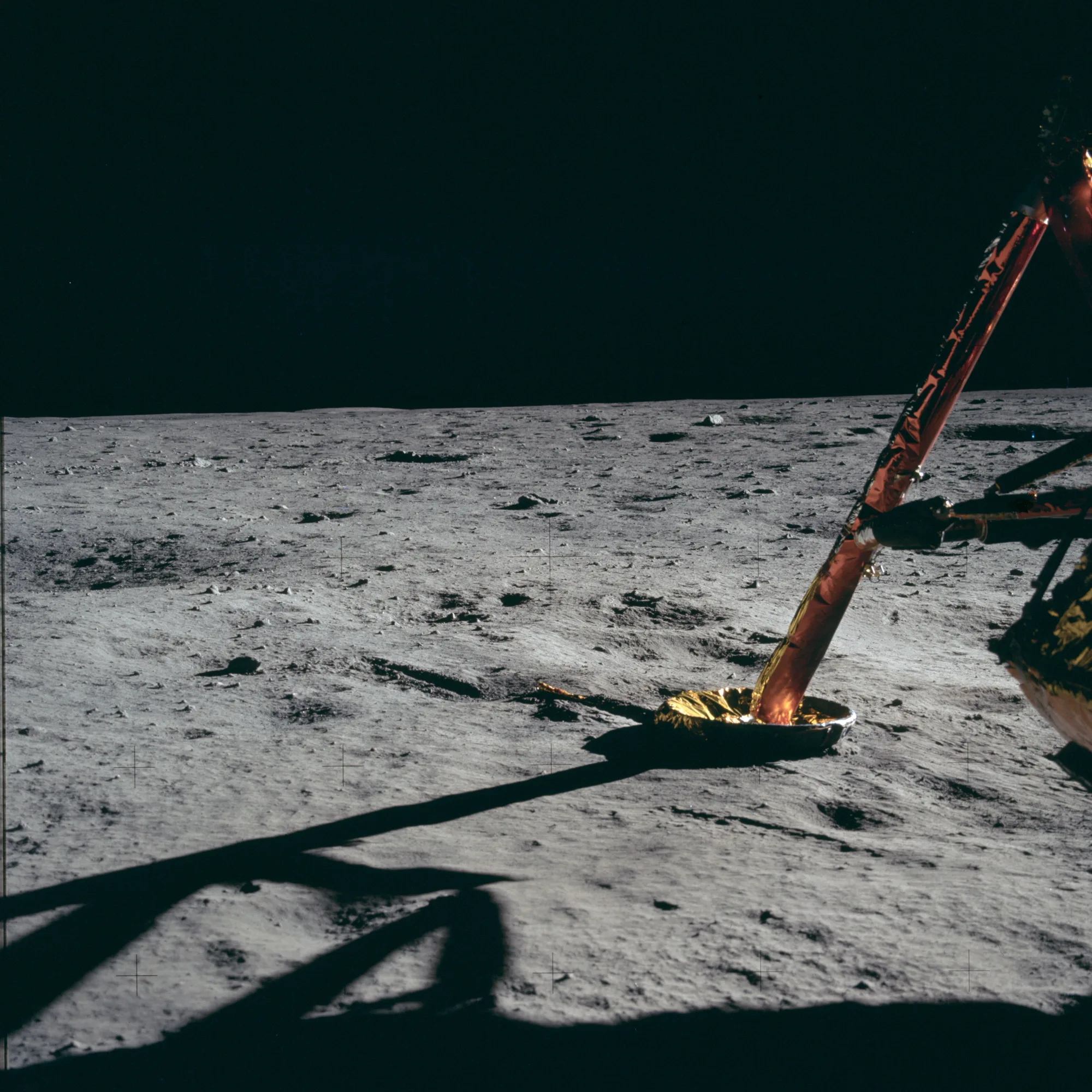
But where were they, exactly?
Minutes after landing, Aldrin read out the computer's estimate of their position. Houston had its own figures, some worked out from the path Eagle had flown, another from the crew's description of the ground around them. They disagreed.
The estimate based on the view outside placed them about three kilometres north of where they really were.
Within the first hour, Aldrin also used the lander's alignment telescope to sight stars and set the guidance platform's orientation for lift-off. Glare left him only two usable viewing positions. He used Rigel, then substituted Navi when another star moved out of view. "That last star was Navi, and it wasn't too well distinguishable." He averaged five sightings by hand and keyed the result into the computer. Combined with the direction of gravity, the measurements produced another estimate of the landing position. In the official report's list of answers, it was the furthest off, nearly four kilometres south of the best one.
High above, Michael Collins, alone in orbit aboard Columbia, was trying to find Eagle. On each pass, from about 110 kilometres up, he pointed his sextant at the area Houston suggested. He could search about two and a half square kilometres of grey plain, looking for a lander the size of a small house.
Pass after pass, he found nothing.
"I say again, I could not see him," he radioed.
"The problem was I didn't know where the LM was, and the ground didn't either," he said later in his debrief.
Because Collins could not find Eagle, Houston needed another way to establish its position. The lander's second radar, the one that had swamped the computer on the way down, tracked Columbia overhead. With Columbia's orbit known, the ground could work out where Eagle sat. Descent photographs later confirmed the position: just west of the crater Armstrong had steered around.
That position mattered for the journey back up. To leave the surface and meet Columbia, Eagle's computer needed to know where it was starting from. Ground tracking gave it a correction to the position calculated at landing. The aim point was still hundreds of metres off in one direction and more than a kilometre in another, but the remaining error could be measured.
The same radar then guided Eagle back towards Columbia. Collins had been unable to see the lander on the surface. He picked it up again only after lift-off, as a blinking light in the night sky.
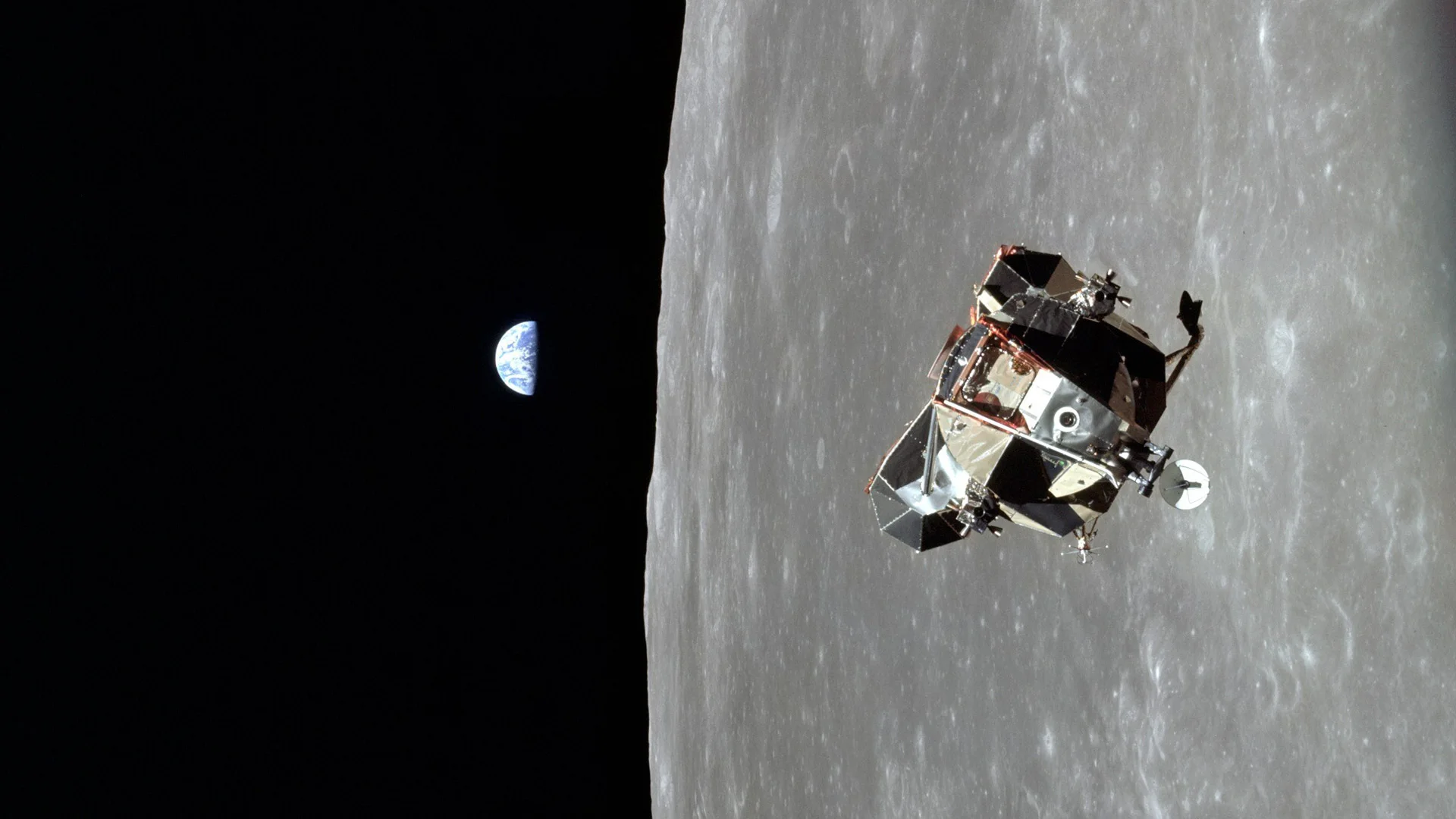
Four months later, another crew was descending towards the Moon. This time, Houston had a way to send up a correction during the descent itself.
Emil Schiesser, a navigation specialist in Houston, had worked through Apollo 11's data and proposed a different approach. Rather than trying to map the Moon's gravity ever more precisely, the ground would use its radio tracking as the descent began, calculate how far off the lander's estimate was, and send up a single number to adjust its aim.
About ninety seconds after the descent engine fired, Houston read the figure up to the crew, and they keyed it in: about 1.3 kilometres.
The figure did not correct the computer's idea of where the lander was, which remained 1.3 kilometres out. It just moved the target by the same distance in the opposite direction. It was a rare case where two wrongs made a right: rather than fix a watch that runs five minutes slow, you simply agree that five to three is three o'clock. The adjustment cost very little fuel and required only a minor change to the guidance software.
As the craft tipped upright, the scale etched into the window showed them on course. Below, the crew recognised a pattern of craters they had studied in photographs on Earth, known as the snowman. The target sat in the middle of Surveyor Crater, a bowl roughly two hundred metres across that held Surveyor III, an uncrewed robot lander that had arrived in April 1967.
Pete Conrad, in command of the lander, used his hand controller seven times to move the computer's aim point, watching each new target register against the window scale. While Armstrong had flown the craft past the rocks himself, Conrad steered the computer's aim to a smooth patch beside the crater, setting down about 120 metres short of where the computer would have put them.
Apollo 11 had ended up nearly seven kilometres past its mark. Apollo 12 set down 163 metres from Surveyor III.
Conrad and Alan Bean had landed close enough to just walk across to the robot. NASA had found Surveyor's place on the Moon by matching pictures taken by its own camera against an image captured from orbit. The two men took photos of the machine that had sat in splendid isolation for two and a half years, then took bolt cutters to the camera that had put it on the map.