The Clockwork Cosmos
Submerged for millenia in the depths beneath the Aegean, these hand-filed gears cycled to map space: physical proof that we underestimated the ancients, and that entire golden ages can get lost in the mists of time.

Message from the deep
You have underestimated us
Every so often, archaeology unearths something that resets our perspective. Often it is a fossil or a lost city. But just over a century ago, it was a corroded lump of bronze pulled from the sea near the Greek island of Antikythera.
Inside were precision-cut gears, thousands of years old, doing a job that nothing else in the historical record would do again for fourteen centuries. It was the first known device to mechanise the heavens, translating the raw space above into interlocking cycles of bronze. It read like a direct message from a civilisation we thought we understood: you have underestimated us.
Discovery
The storm that changed history
In the year 1900, a crew of Greek sponge divers from the island of Symi were heading home after a long season off North Africa. Caught in a storm, they sheltered by a bare little island halfway between Crete and the mainland called Antikythera. Taking the opportunity to look for sponges, the youngest diver from the crew went under, only to surface soon after in a state of shock. He told his captain that there were a heap of dead, naked women and horses on the ocean floor.
Which is not what you'd expect to find on a sponge dive.
The captain descended sixty metres to look for himself. He too saw the inert figures, but realised they were statues of bronze and marble, scattered across the seabed. They had stumbled onto a shipwreck holding a luxury cargo of fine art that went down two thousand years earlier.
On their return home, the crew discussed what they should do. Their choice was to return to plunder the site or alert the authorities. Luckily for us, they chose the latter.

The same crew were hired as the divers to salvage the cargo, it took ten months, yielding sculpture, jewellery, coins, and one unassuming greenish lump. Silver coins found at the site dated the ship to roughly 60 BC. Analysis of the lead points to it being a Greek vessel carrying goods from Pergamon, Ephesus, Rhodes and Egypt, heading westward.
The conversation about the loss of the ship and its cargo was probably a tricky one: "Sorry dude, we lost all your stuff!"

Reception
A technology never seen before
The lump sat largely ignored in the National Archaeological Museum in Athens until May 1902, when the drying bronze began to split open. The museum's director Valerios Stais, peering into the fresh fracture, caught sight of something unthinkable: the faint outlines of precision gear wheels, calibrated scales, and minute Greek text embedded in the bronze.
On that morning, history shifted. Antiquity had yielded thousands of statues and coins, but never a single piece of complex gearing. Scholars were left staring at a machine with no reference point in the known world.
Initial studies
Between 1902 and 1939, research centred on whether the device was a navigational astrolabe or, as Albert Rehm first proposed in 1905, a complex astronomical calculator and mechanical planetarium. Active research largely halted during World War II when the remains were buried in sand under the floor of the museum to hide them from the invading Nazi army.
Derek de Solla Price (1922 to 1983) was a British-born physicist and science historian and the first post-WWII scholar to analyse the fragments in depth and demonstrate that the device was an ancient Greek astronomical calendar computer.
He famously wrote that finding the mechanism was "as spectacular as if the opening of Tutankhamun's tomb had revealed the decayed recognisable parts of an internal combustion engine."
A forgery, or forgotten ingenuity?
By framing the mechanism as an impossible anomaly out of its time, Price inadvertently fuelled fringe claims that the artefact was a modern forgery or hoax and led mainstream scholars to initially dismiss his findings.
A forger, though, would need to fake centuries of underwater corrosion, which rendered the inscriptions illegible without modern scanning technology. They would also need an encyclopaedic knowledge of ancient Greek astronomy.
The doubters reveal a modern prejudice that considers the ancient Greeks mostly pursuing abstract thought while the Romans did the actual engineering. A Victorian reader would not have blinked twice, knowing that writers from Cicero to Vitruvius had already documented a rich tradition of ancient gearwork.
It does however raise the question: if the Greeks could do this in the first century BC, where is everything else? Why is there nothing like it for fourteen hundred years?
The decoders
A century-long quest
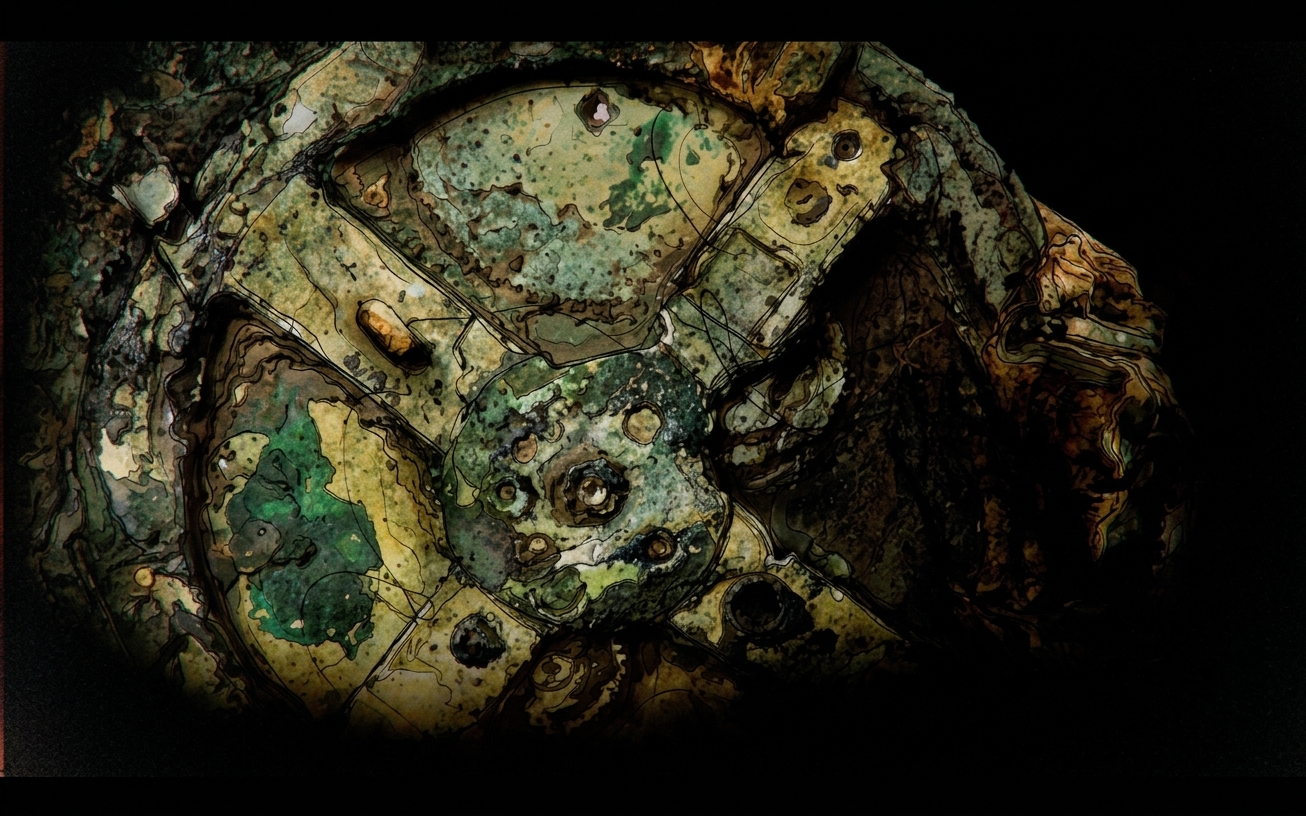
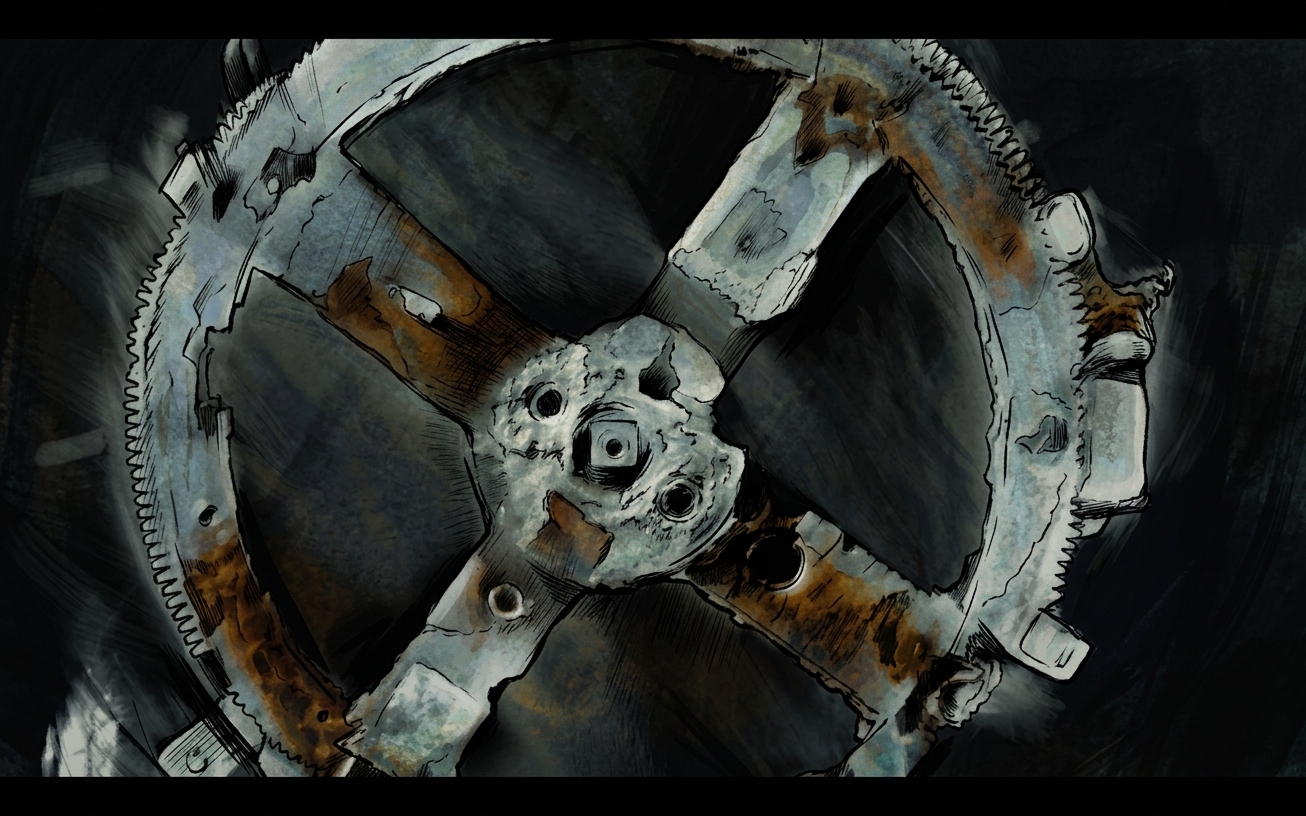
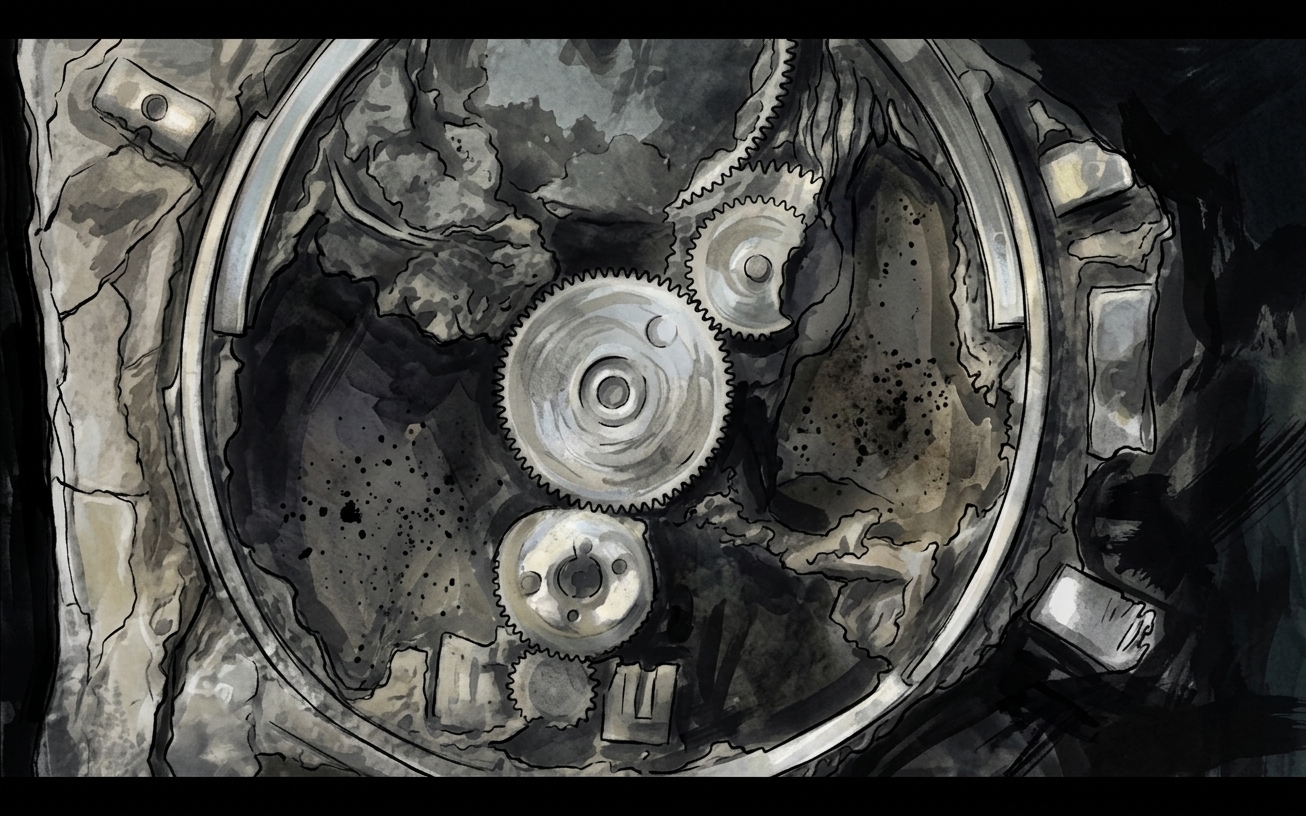
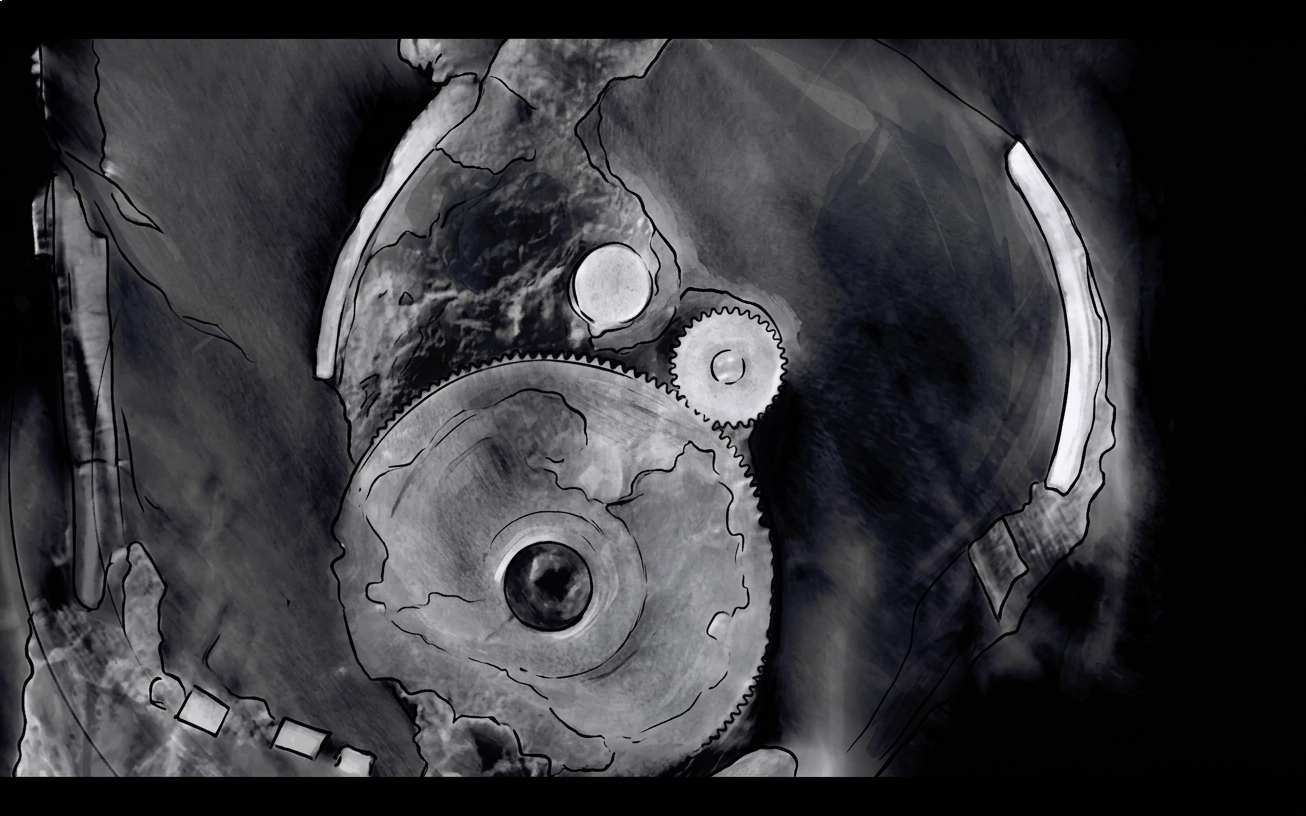
Unravelling the puzzle took a century of scientific detective work. In the 1970s, de Solla Price and physicist Charalampos Karakalos took the first 2D X-rays, uncovering a 19-year Metonic cycle encoded in the gears that synchronised the Sun and Moon. By the 1990s, engineer Michael Wright used custom 3D X-rays to discover that the rear dials were actually multi-turn spiral grooves guided by extendable pointers. It is the exact same principle as a record player stylus following a groove. Wright also identified a pin-and-slot gear assembly that modelled the Moon's changing orbital speed, revealing the machine as a true mechanical planetarium.
Slicing through the decay unveiled three thousand Greek characters: an ancient instruction manual for the cosmos
The definitive leap came in 2005 when an international research team founded by Tony Freeth and Mike Edmunds shipped "Blade Runner," an eight-ton custom built microfocus CT scanner, directly to the museum in Athens. Slicing virtually through the corrosion, it revealed three thousand hidden Greek characters, an ancient user manual, and mapped a 223-month eclipse prediction spiral on the lower dial.
Deep diveThe Metonic cycle
The Moon takes about 29½ days to go from new moon to new moon. Twelve lunar months make only 354 days, about 11 days short of a solar year. But over 19 solar years, 235 lunar months bring the Moon back to almost the same phase at the same time of year. This is the Metonic cycle, named after Meton of Athens, the Greek astronomer who first described it in the 5th century BC.
The device reproduces this cycle. Its internal gearing uses 254 rather than 235, because the Moon completes 254 orbits relative to the distant stars in those same 19 years. Subtracting Earth's 19 journeys around the Sun gives the 235 lunar months that return the Moon to the same phase (254 - 19 = 235). Interlocking gear trains perform this subtraction mechanically.
Key astronomical terms
• Synodic Lunar Month (29.53 days): Time from New Moon to New Moon. It takes 27.3 days for a 360° orbit, but the Moon must travel an extra 27° to realign with the moving Earth and Sun. (Greek: synodos = "a meeting")
• Tropical Solar Year (365.24 days): Time from spring equinox to spring equinox. (Greek: tropē = "a turn")
The investigation continues. When Clickspring machinist Chris Budiselic hand-built a replica and floated a 355-hole lunar ring, Glasgow researchers Graham Woan and Joseph Bayley deployed gravitational-wave statistics to test his claim. Their math backed the 355-day lunar theory. Consensus is still far away though as 365-day solar loyalists insist that the ancient bronze had just deformed after so long underwater. As Woan put it, "we've adapted techniques we use to study the universe today to understand more about a mechanism that helped people keep track of the heavens nearly two millennia ago."
What it did
A model of the universe
Two thousand years ago, inside a Greek workshop, an ancient engineer built a machine to show that time and space were physical: things you could touch, measure, and turn with a handle.
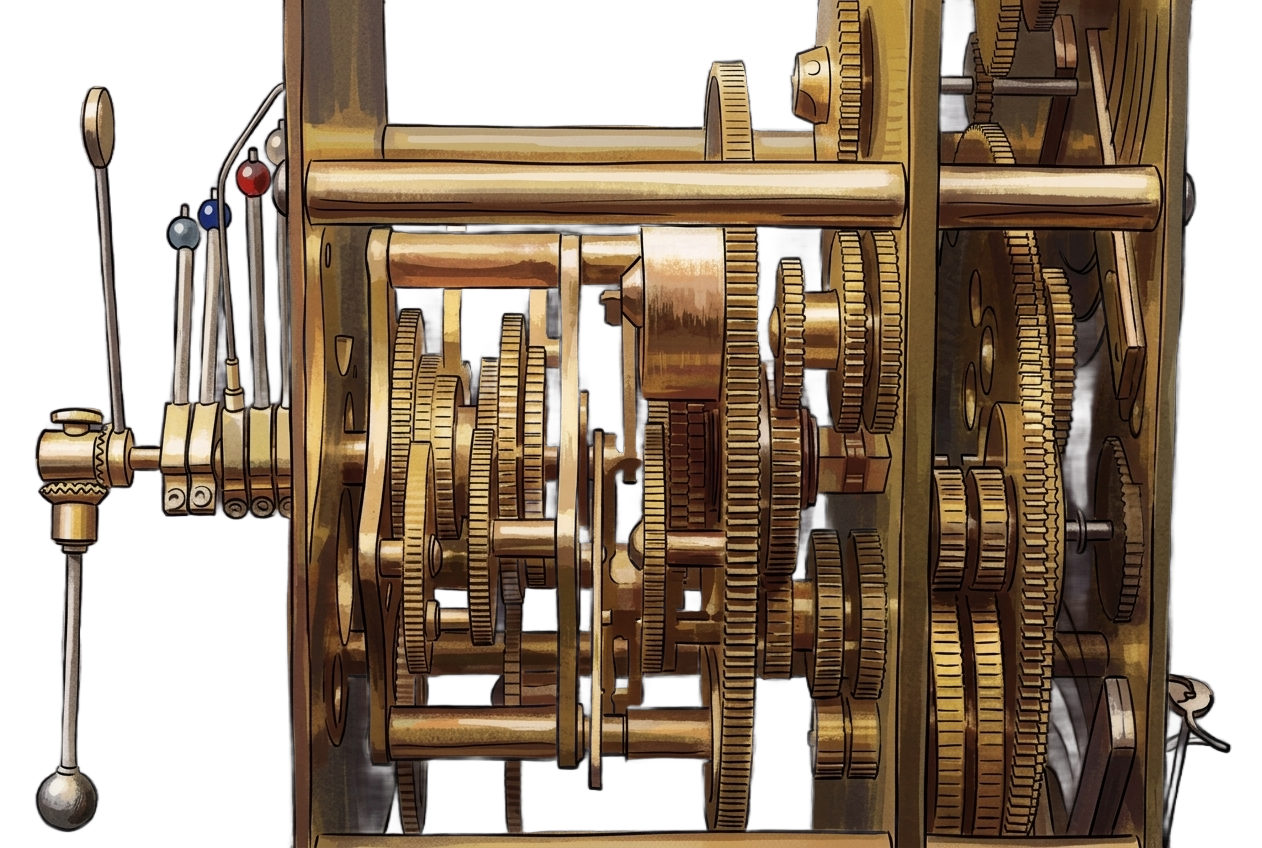
The mechanism itself was remarkably compact, housed in a wooden case just 31.5 by 19 by 10 centimetres. Opening its hinged doors revealed gleaming bronze plates, where the instruction manual was carved straight into the casing in tiny letters under two millimetres tall. On the side sat a small brass hand crank. Inside, sandwiched between the bronze faces, was a precise matrix of over thirty hand-cut bronze gears interlocking with tiny, razor-sharp teeth.
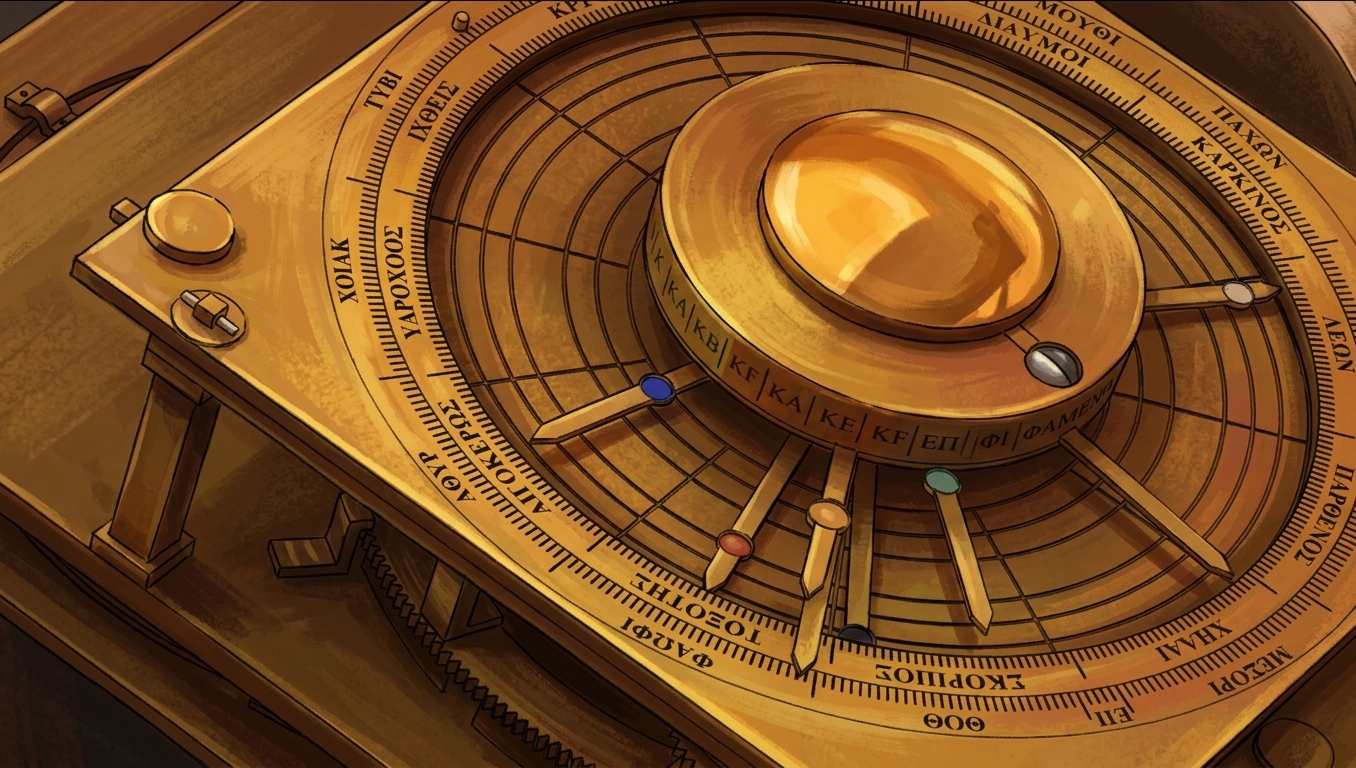
The front of the box was an active visual simulation of the solar system, set inside two concentric dials. The outer ring was engraved with 365 individual days for the Egyptian civil calendar, able to be manually shifted to keep pace with leap years. Just inside it sat a fixed scale divided into twelve 30-degree zodiac sectors. Sweeping over these dials were coaxial hands carrying distinct, polished markers: a golden sphere for the Sun, a half-black, half-white brass globe that turned inside a tiny frame to display the Moon's visual phases, and pointers studded with semi-precious stones tracking Mercury, Venus, Mars, Jupiter, and Saturn in their looping retrograde paths across the sky. Framing these dials was a parapegma star calendar, matching zodiac positions to the exact dates stars like the Pleiades, Arcturus, and Altair would break over the horizon at dawn or dusk.
The back: time itself
Flipping the machine revealed the structure of time itself, cut into bronze plates as giant multi-turn spirals. To read them, the machine used extendable pointer-followers with tiny pins that glided along the spiral cuts. When mechanical engineer Michael Wright examined the 3D scans in the 1990s, the realisation hit him: it worked on the exact principle of a turntable stylus tracing a vinyl record.
It worked on the exact principle of a turntable stylus tracing a vinyl record.
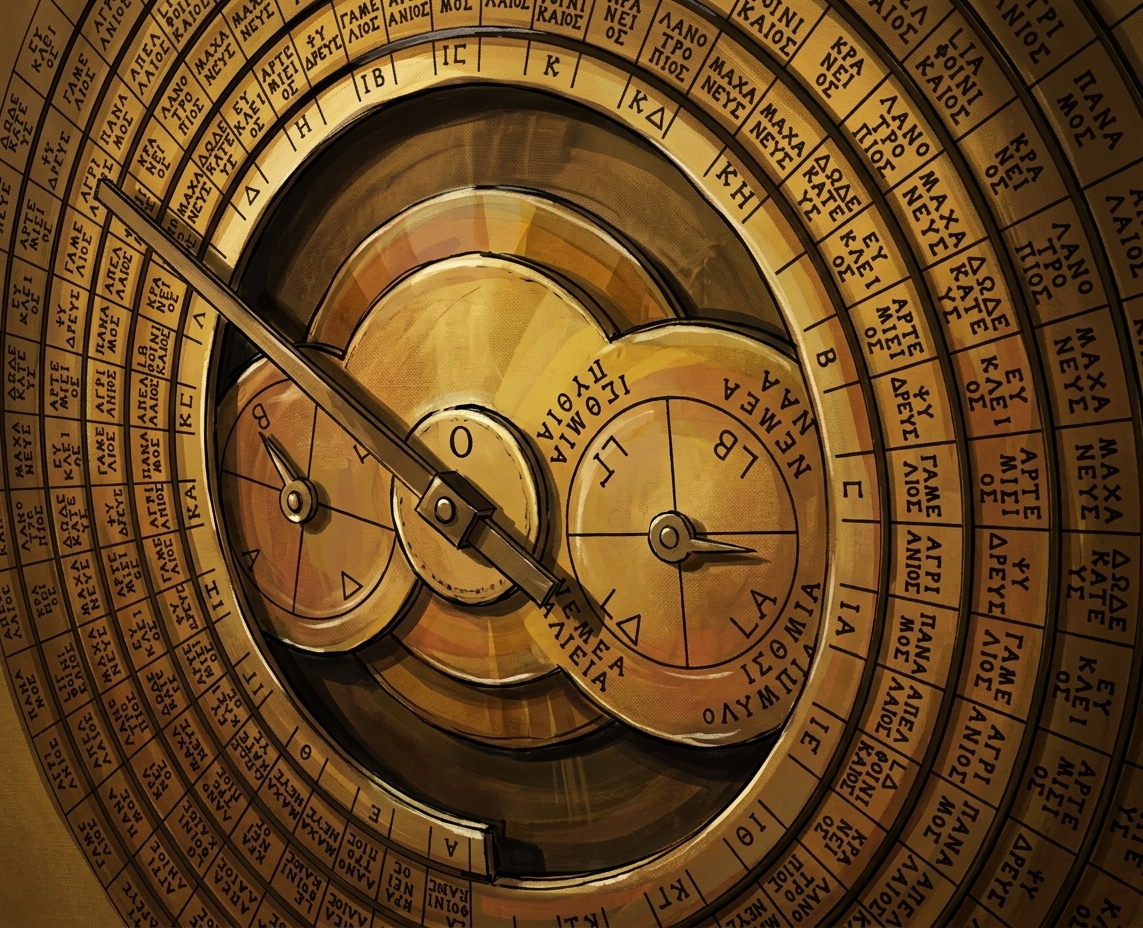
The upper spiral traced five full turns divided into 235 monthly slots, locking 19 solar years to 235 lunar months in the Metonic cycle. Tucked within its loops were two subsidiary dials: a 76-year Callippic dial to correct long-term calendar drift, and a 4-year Games dial counting down to the Olympic, Pythian, Nemean, and Isthmian athletic games.
Gearing scheme after Freeth and Jones (2012), by Tomisti, CC BY-SA 4.0.

The lower spiral traced four turns divided into 223 slots, governing the Saros eclipse cycle. In 51 of these slots, tiny carved glyphs featuring Σ (Selene) and H (Helios) alerted the user of upcoming solar or lunar eclipses down to the precise hour of the day or night. Nested inside was the 54-year Exeligmos dial, calculating whether to add 0, 8, or 16 hours to the predicted eclipse time to compensate for Earth's rotation.
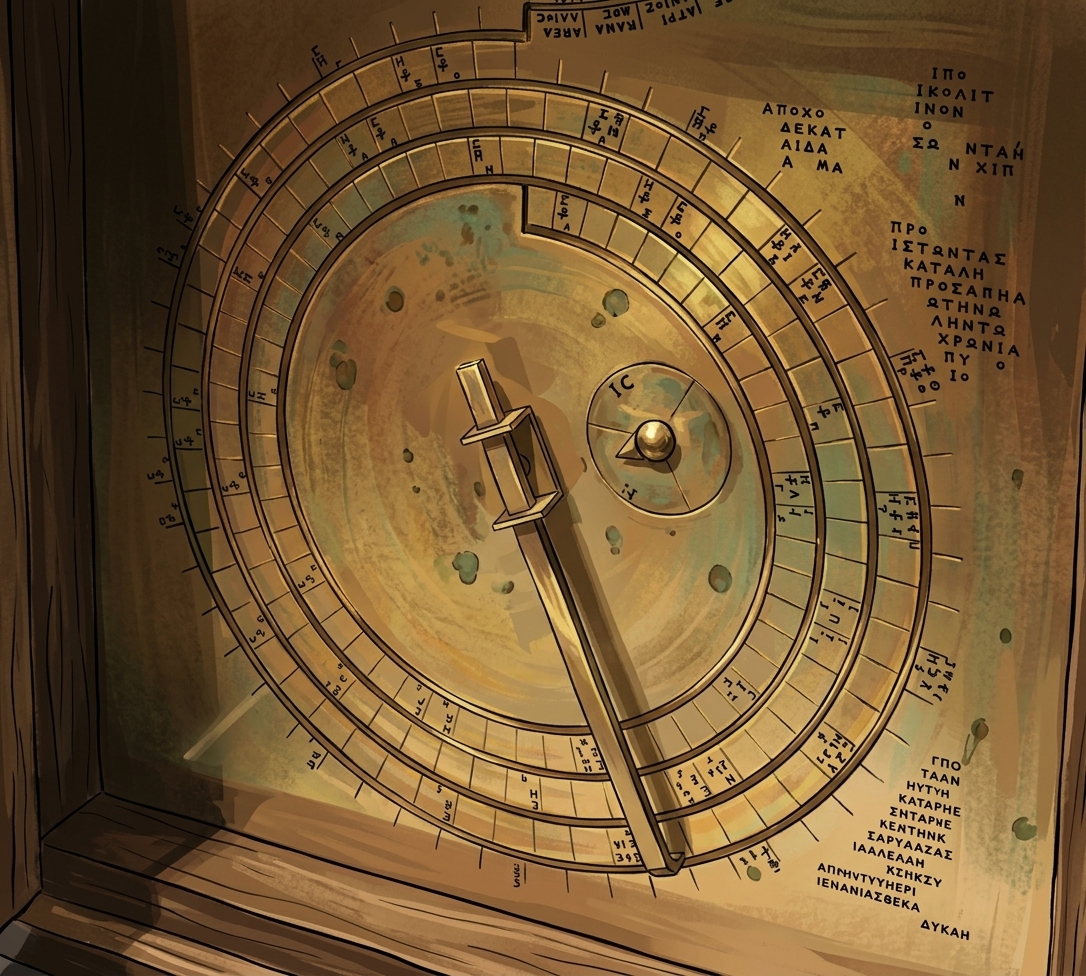
Turning the side crank set the whole sky in motion. A single turn of the handle triggered a chain reaction of interlocking gears, stepping speeds up and down to match the true pace of the cosmos.
Deep diveThe Saros Cycle
Solar and lunar eclipses only happen when the Sun, Earth, and Moon line up perfectly in space. Because the Moon's orbit is tilted and oval-shaped, this alignment does not happen every month. Over 223 lunar months (about 18 years and 11 days), the celestial geometry resets, bringing the Moon and Sun back to almost the exact same relative positions. This repeating loop is the Saros cycle.
Each Saros cycle includes roughly 8 extra hours beyond full days. Because Earth rotates for another eight hours before the alignment completes, each repeating eclipse happens one-third of the way around the globe. Discovered by the ancient Babylonians, the name comes from their term for a repeating measurement of time.
The device reproduces this cycle on its lower back dial, cut into bronze as a four-turn spiral with 223 individual slots. Inscriptions inside the slots predicted the month and hour of upcoming solar and lunar eclipses. To account for the 8-hour shift, a small secondary dial called the Exeligmos tracked three full Saros cycles (54 years), telling the user whether to add 0, 8, or 16 hours to the predicted time.
Perhaps its greatest mechanical secret was how it captured the Moon's shifting speed across its orbit. The Moon speeds up when near Earth and slows down when farther away. To mechanise this gravitational variation, the makers used an epicyclic pin-and-slot assembly. They mounted two gears slightly off-centre from each other, connecting them with a sliding pin. As the drive gear turned, the pin slid back and forth in the slot, forcing the second gear to speed up and slow down in a smooth, continuous wave. To account for the slow wobble of the Moon's elliptical orbit, they placed this entire offset assembly on a master turntable that rotated once every 8.88 years.
An ancient scholar had only to grip the brass handle and turn. With a quiet click of bronze teeth, decades of future eclipses swept across the dials.
Gearing scheme after Freeth and Jones (2012), by Tomisti, CC BY-SA 4.0.
The makers
A maker's mark and a delivery address
The back dials point directly to a specific customer. On the four-year Games dial, tiny inscriptions list major athletic competitions, including the Halieia, a festival held only on the island of Rhodes, and the Naa, celebrated far to the northwest at Dodona. To suit its owner, the maker even rotated the calendar dial by about seven degrees, exactly one lunar month, aligning the gearwork with the buyer's local Corinthian calendar. This was bespoke bronze, engineered to order.
Remarkably, this corroded calculator even fixes the modern history books. In 172 BC, King Eumenes II complained to the Roman Senate that the island of Rhodes was secretly aiding Rome's enemies. The Romans sided with the king, deeply humiliating Rhodian diplomats. In retaliation, Rhodes banned the king's ambassadors from attending their next Halieia festival. Historians knew the ban occurred, but wrestled over the exact date.
The mechanism's four-year dial provided the missing link: it proves the Halieia always took place in the summer precisely one year before the Olympic Games. Since the historical record places the next Olympics in 168 BC, the barred festival had to be 169 BC. Two thousand years on, an ocean-damaged bronze relic settled the timing of an ancient political grudge.
From gods to gears
When mathematics replaced myth
At its heart, the mechanism modelled the universe as a clockwork machine. As researcher Mike Edmunds puts it, the box proved to people that "you don't have to have gods pushing the planets around." Author Jo Marchant notes that "within these ancient gear wheels there is an idea that changed humanity: the universe as a machine, a metaphor that became an entire philosophy."
What survived
The chain
Today, the bronze has corroded into a brittle mineral called atacamite. A machine built to calculate the exact return of celestial cycles was ultimately undone by time itself: decay, the one process in nature that never comes back round.
Which brings us back to our earlier question: if ancient workshops could craft something this sophisticated in the first century BC, where did the technology disappear to for the next fourteen hundred years?
Part of the answer could lie in how ancient cultures viewed progress. As researcher Tony Freeth points out, ancient builders did not picture history as an upward line leading toward better and better technology. "These weren't people picturing a future the way we do, some upward line running off into better and better machines," he says. "Ask them what tomorrow looked like and the honest answer was that it looked like yesterday, a return to a golden age rather than a road going anywhere new." A machine built to track things coming back round was crafted by a culture that expected history to do the same.
The physical machine was fragile, its bronze gears barely two millimetres thick. When an instrument broke or fell out of use, owners melted it down for the precious raw metal. This specific device survived because it sank to the bottom of the Aegean Sea, out of reach. Its high sophistication reveals a rich, lost tradition of ancient technology whose creations were simply melted down and recycled out of history.
The bronze gears stayed on the seabed, but the underlying idea kept moving. A sixth-century Byzantine pocket sundial was powered by eight internal cogs. Persian metalworkers later adapted the same mechanics to automate lunar calendars, perfecting brass astrolabes with remarkably similar gear trains. By the fourteenth century, when massive astronomical clocks began appearing inside European monasteries, they were not a sudden miracle. They were the resurrection of an ancient secret.
The metal decayed, but its mechanical DNA survived. The idea that human hands can cut teeth to mirror the movement of the stars passed from craftsman to craftsman across centuries. It runs in a direct, unbroken line to our mechanical wrist watches.
- driver wheel, turning at a steady rate
- output wheel, carries the pointer
- pointer: output the linkage moves
- pin and slot: pin slides as distance changes
- pin's reach from follower
- time steps behind pointer
- steady drive indicator, arc shows difference
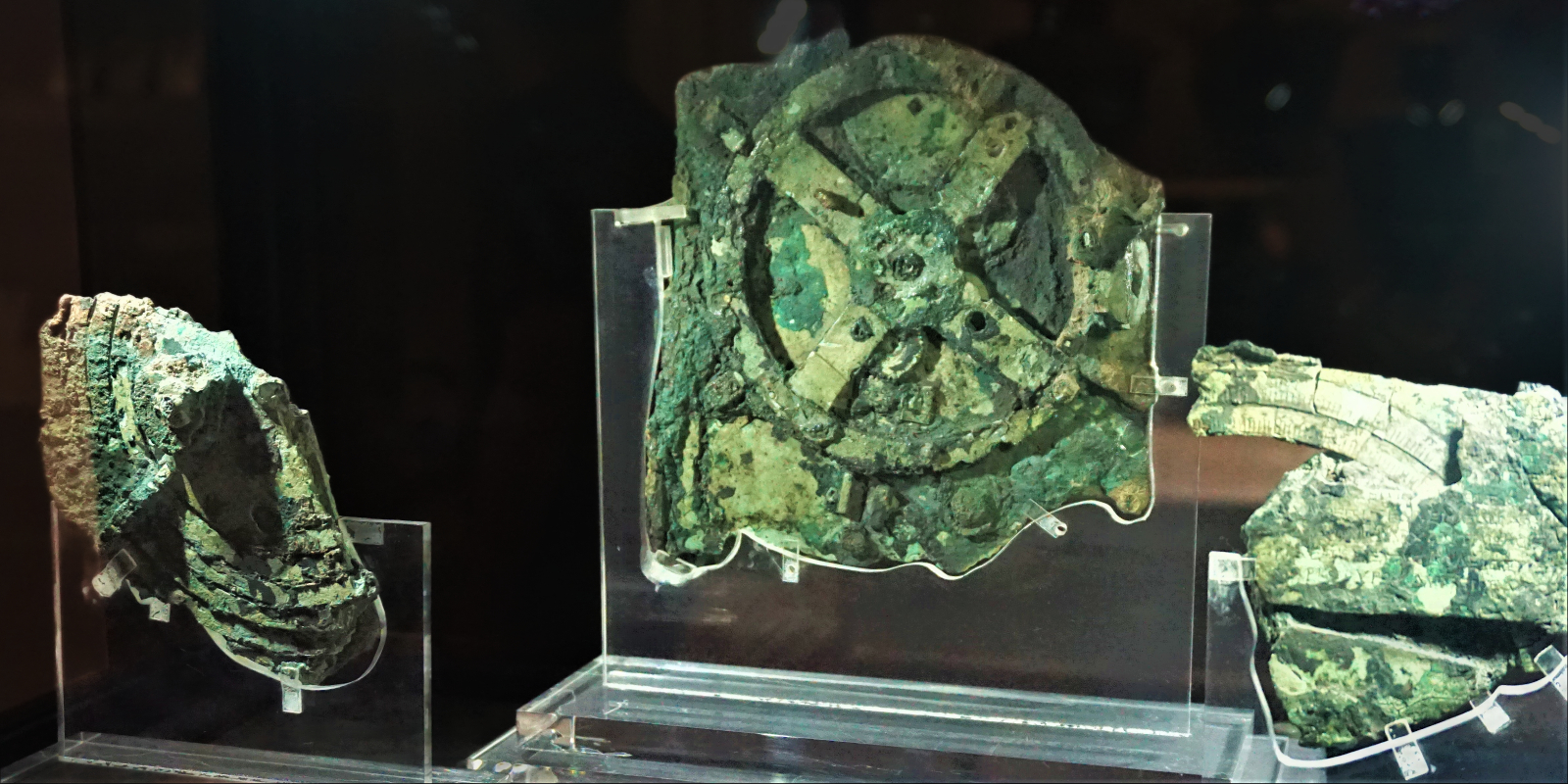
Antikythera Mechanism, National Archaeological Museum, Athens, by Joy of Museums, CC BY-SA 4.0.

Out of the dark
Reach for the stars
The Antikythera Mechanism lay in the dark for more than two thousand years, corroding on the seabed, until not even memories of it remained.
When a team of sponge divers hauled that decaying green rock out of the water, it completely flipped the script on our version of history. It proved that human technical mastery can flourish, vanish into total darkness, and leave behind an unsettling question: how many other realities have we forgotten?
Today, the device resides in a climate-controlled display case in Athens. Its internals are seized in atacamite, but it remains an awe-inspiring monument to human curiosity, serving as a reminder that two thousand years before we ever launched a rocket into orbit, we were already holding the clockwork of the cosmos in the palm of our hands.
Antikythera Mechanism, National Archaeological Museum, Athens, by Joy of Museums, CC BY-SA 4.0.
Further reading
 The recovery: expeditions and catalogued artefacts, 1900 to 2022 A searchable gallery cataloguing every object raised from the wreck across four recovery campaigns, each entry cross-referenced against its museum inventory number and official provenance record.
 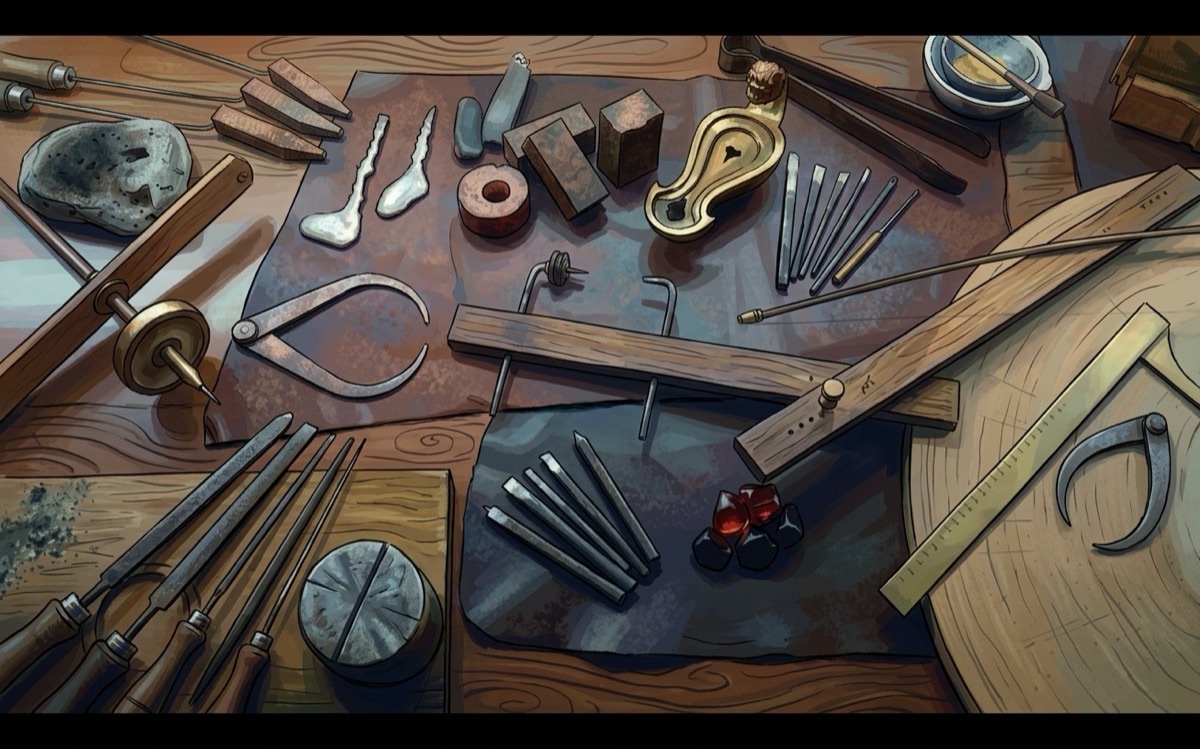 Clickspring: building a working replica of the mechanism, piece by piece A YouTube series following machinist Chris Budiselic as he hand-builds a working reconstruction using only tools and methods the ancient Greeks would have had available.